
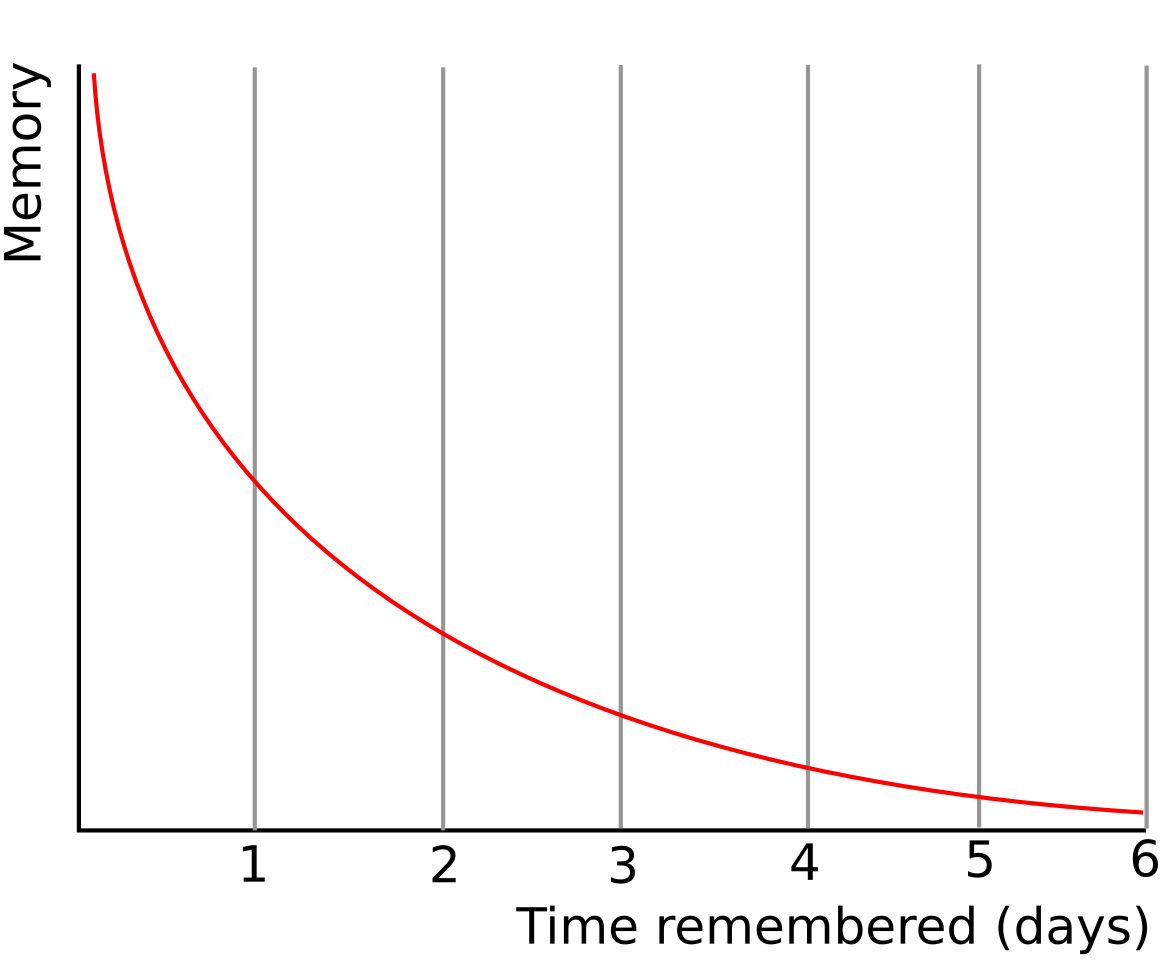
In the 1880s, German psychologist, Hermann Ebbinghaus, conducted experiments on memory that showed our retention of information after initial exposure behaves like an exponential decay function—after 1 day nearly 60% of information is lost and after a week nearly 75% is gone.11
Following the publication of Ebbinghaus’ Forgetting Curve, researchers began to explore how to combat this phenomenon. They found that the best way to disrupt the natural forgetting process is through spaced repetitions at regular intervals—dramatically improving retention.14

The Leitner System is a popular method for implementing spaced repetition that was developed by Sebastian Leitner in 1972. Using flashcards, students sort cards over the course of a week to focus their repetitions on information they’ve previously missed.14
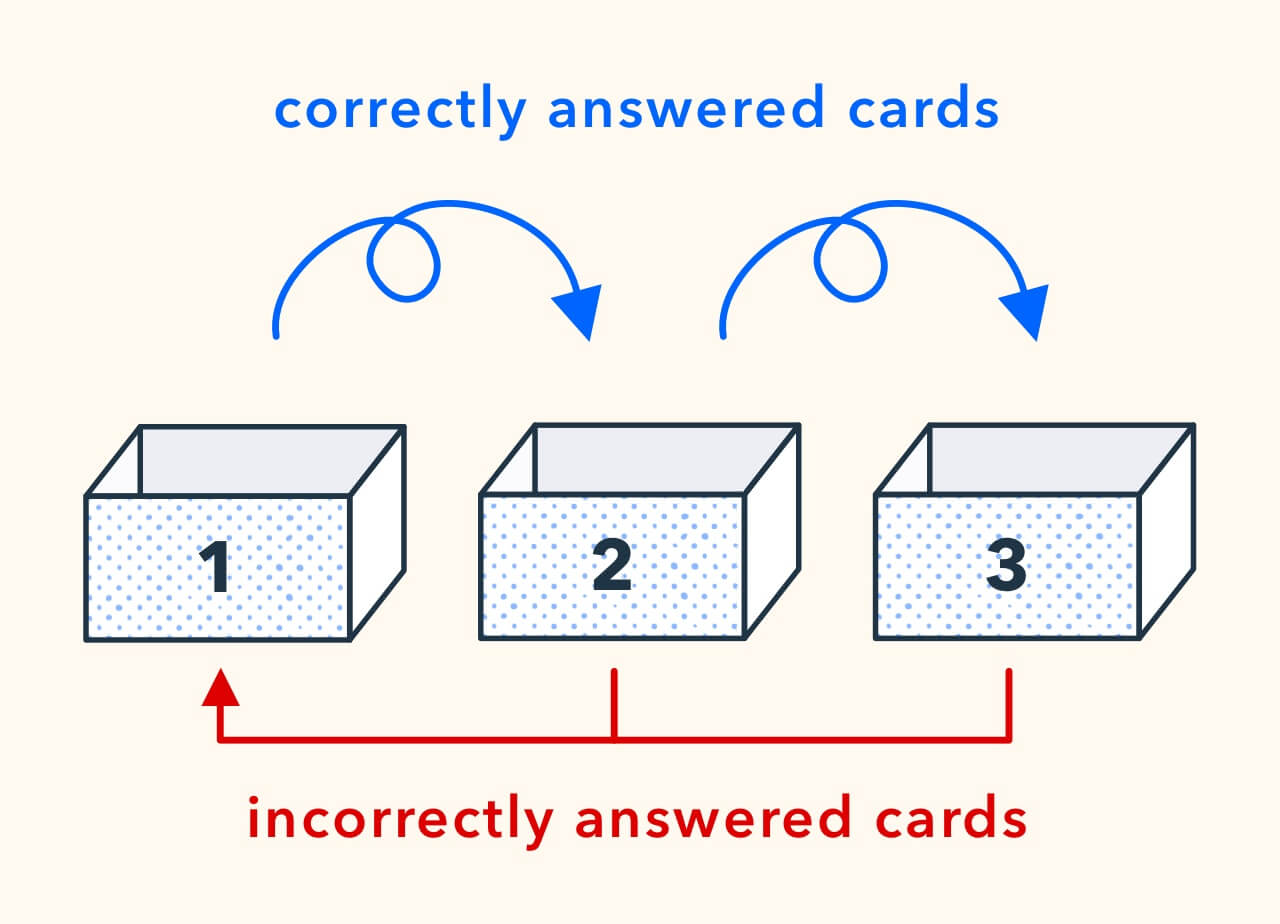 Source: Pocket Prep
In recent years, research has been done on developing and testing optimized spaced repetition algorithms that further improve students’ retention.14
LS-AES are a subset of adaptive education systems focused on students’ learning preferences. Research shows that adapting content to students’ learning styles improves their achievement and performance.5
The FSLSM is one of the most reputable and widely-used learning models proposed in academic research.5
The framework categorizes learners along four dimensions:13
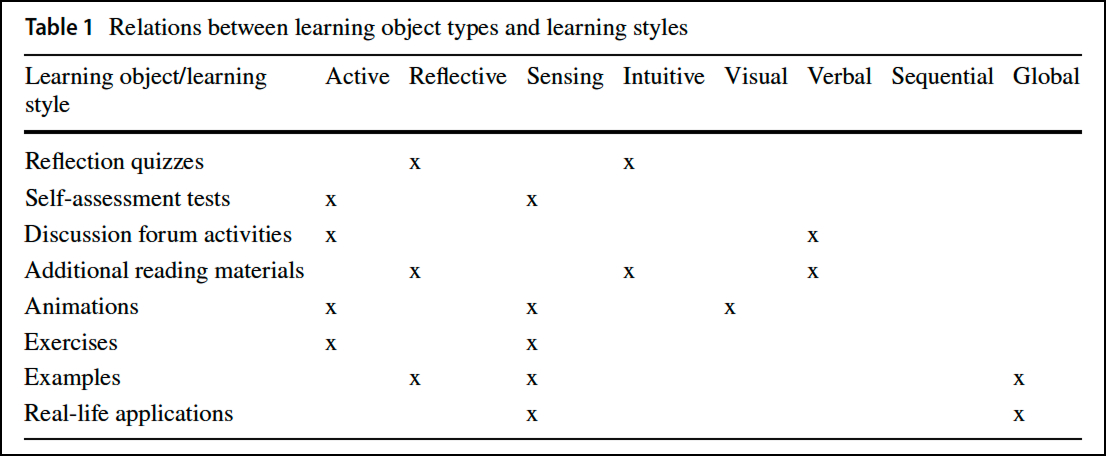
Research shows that the FSLSM is an effective way to match matching the presentation of course content to the students’ preferred learning style. As shown in the table to the right, different learning objects are recommended for different learning styles.
In addition to tailoring the content, research also suggests modifying the sequence of different kinds of content for different styles.5
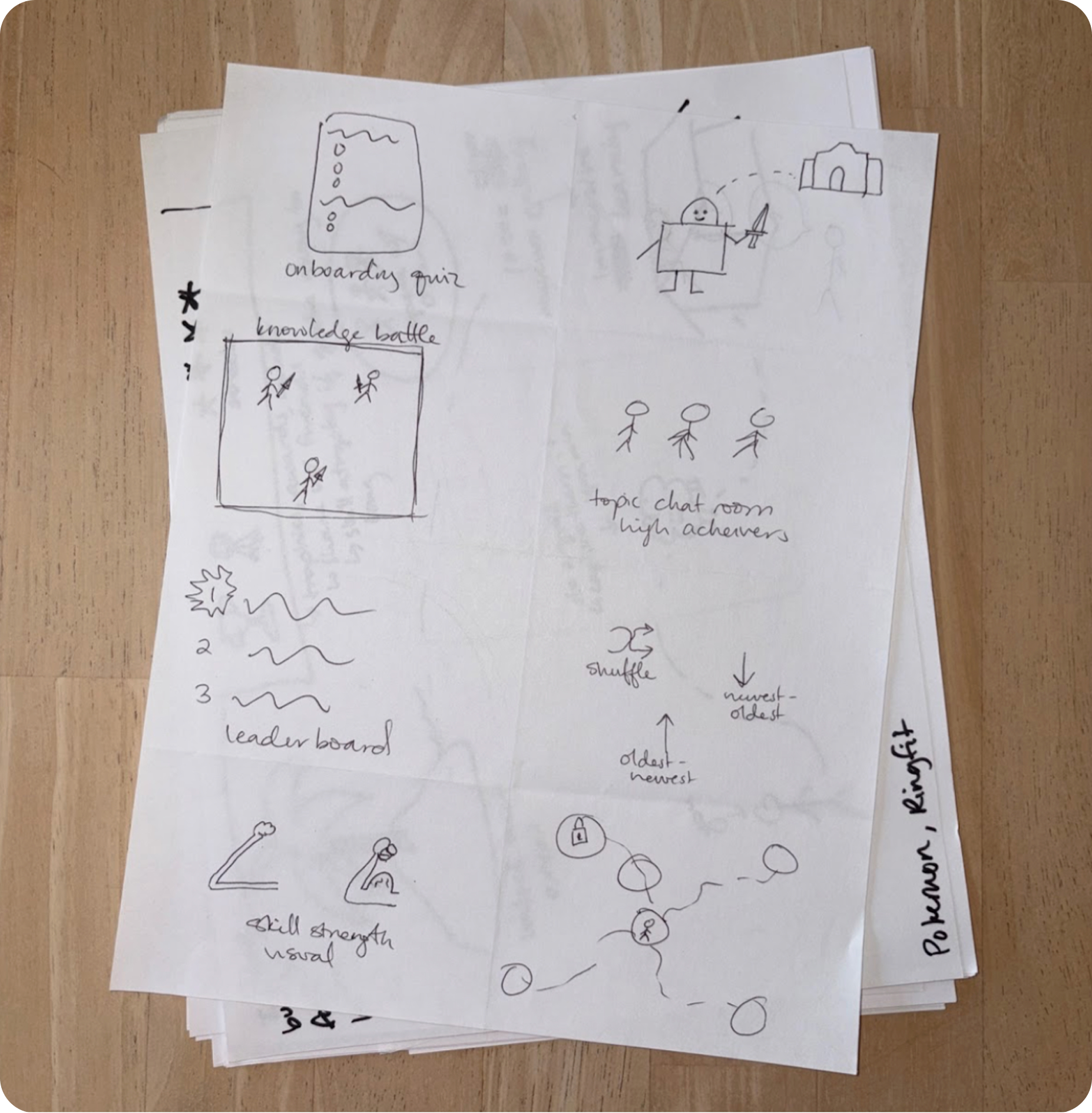
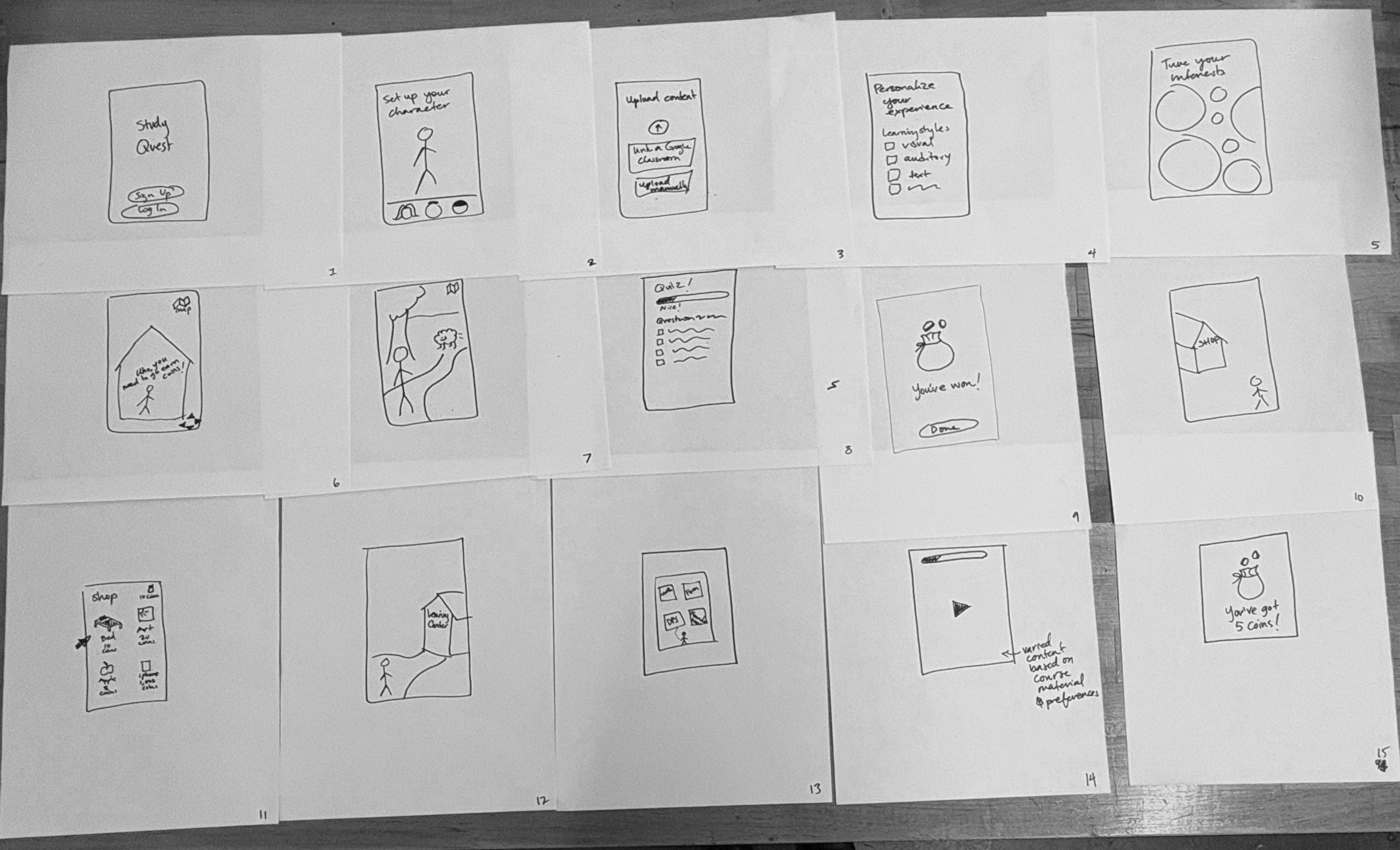
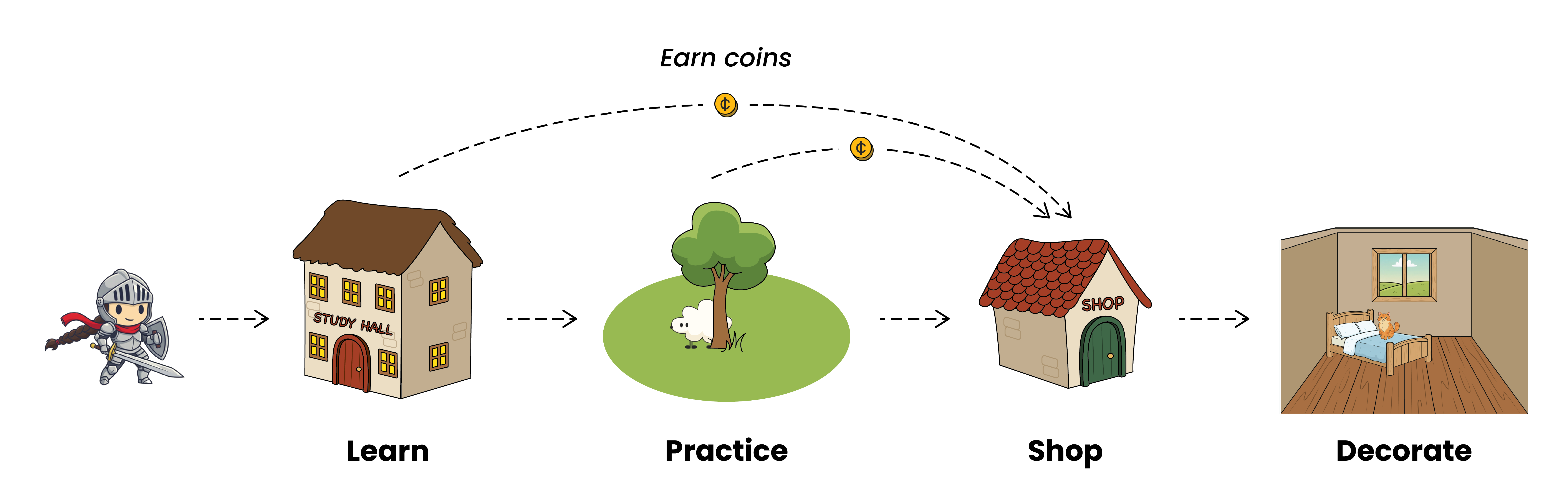
As apps like Duolingo and academic research have shown, incorporating gamification in the learning process can foster student engagement. However, its efficacy in inducing engagement depends on its alignment with the individual student—both in terms of their learning style (as discussed above) and in terms of their player type.13
Developed by psychologist Richard Bartle, this framework categorizes players into four groups:
Researchers have developed an abbreviated questionnaire that assesses both learning style and player type.13
“Intrinsic motivation refers to the drive to use or interact with a design because of an inherent interest or pleasure in the activity itself rather than for some separable outcome.
Extrinsic motivation involves using or interacting with a design due to external rewards or pressures, rather than the enjoyment or satisfaction derived from the activity itself.”15
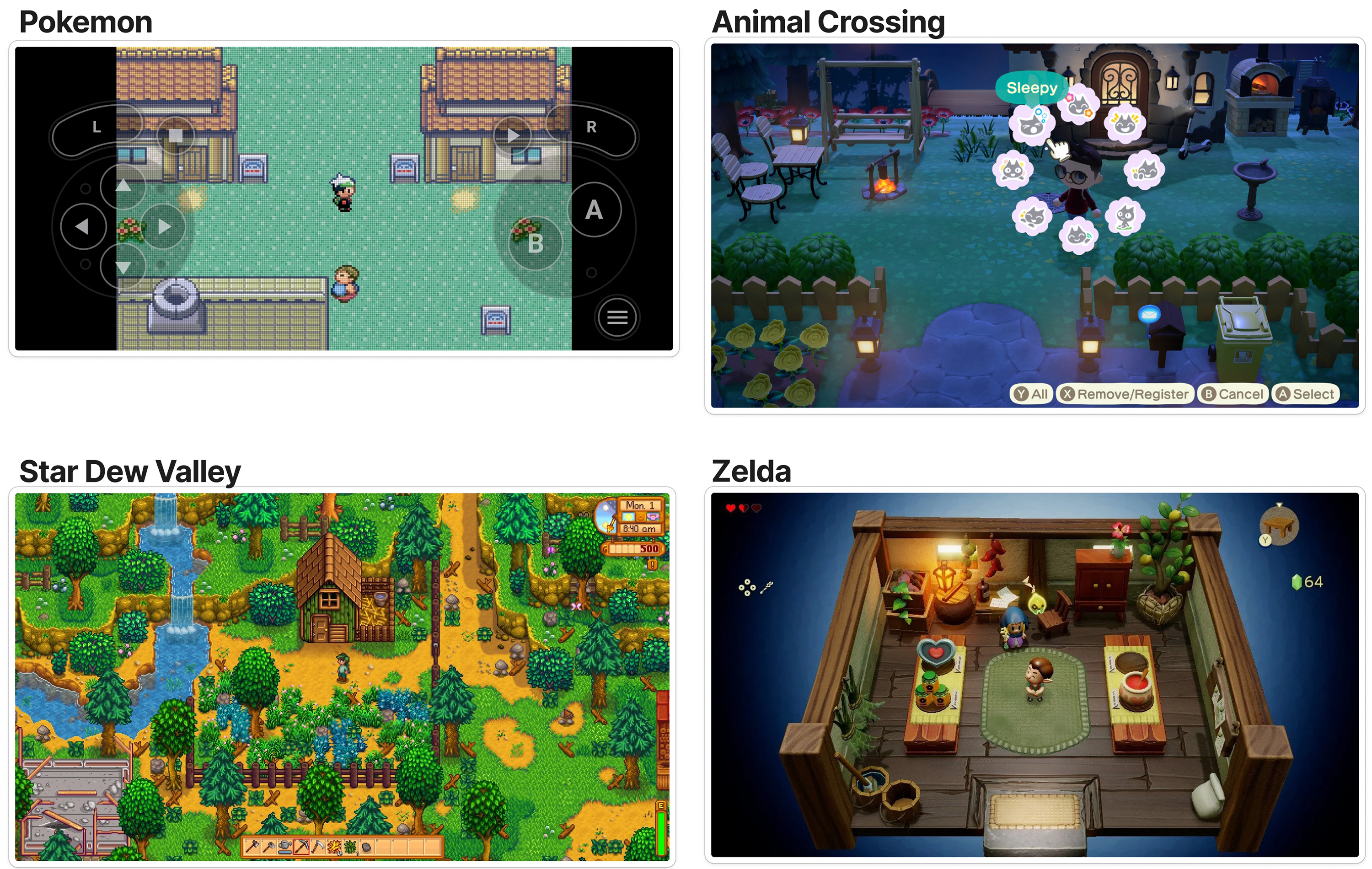
One study found a strong player preference for games in a fantasy or nature setting.13
Social recognition features15
AI unlocks new potential for personalization and dynamic adaptability in online learning environments. As shown above, being able to customize content and its delivery to the individual student can significantly improve learning outcomes including achievement and engagement. A lot of research is being done across many different facets of educational AI exploring different approaches and methods of application and different modeling techniques.12
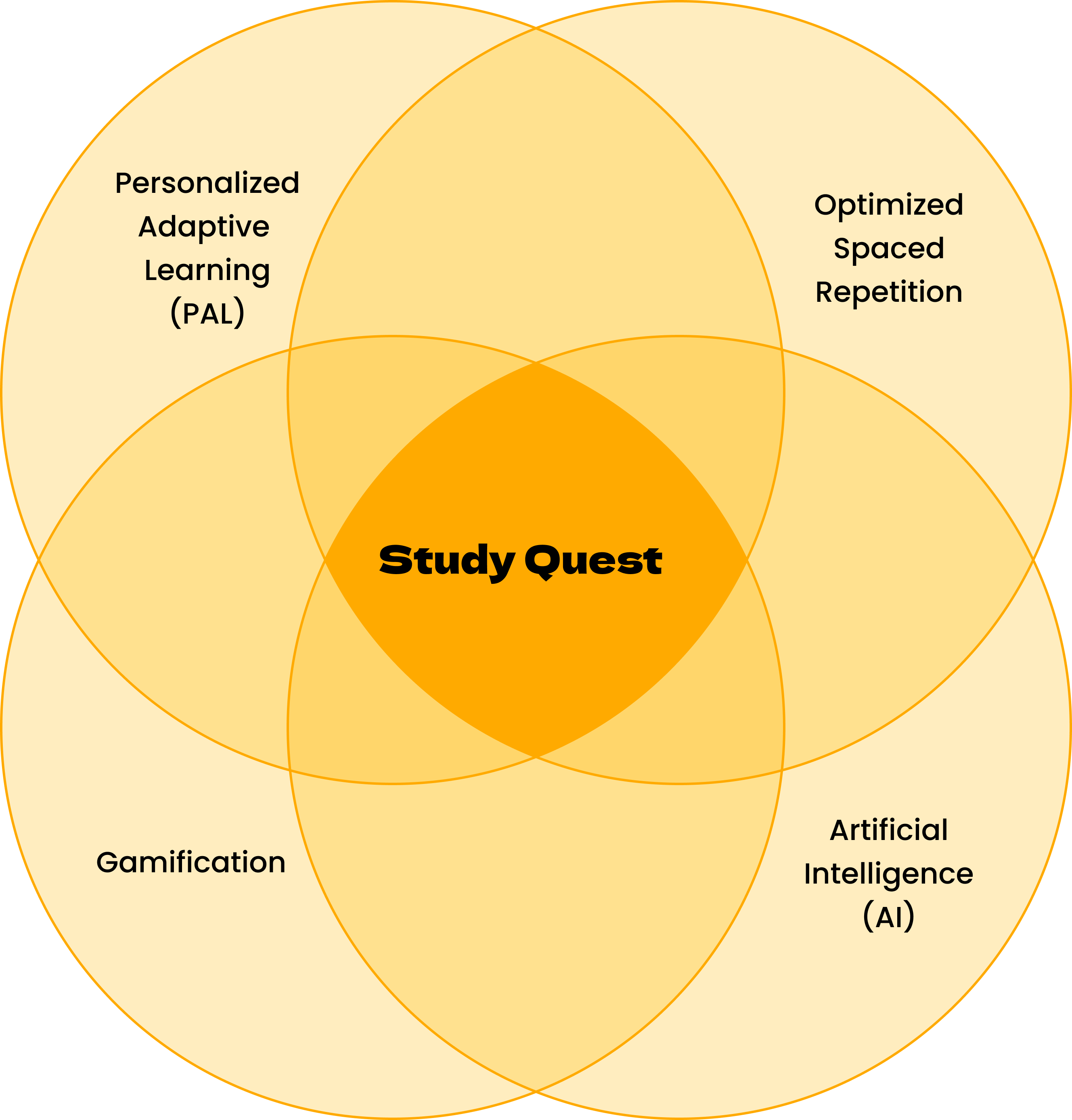
Personalized Adaptive Learning is a new pedagogical approach that, “adjusts content and teaching methods to individual student needs based on detailed analysis to offer more effective and engaging learning...PAL systems are built on the premise that the learning process is unique to each student.”12
Researchers are developing and testing proof-of-concept and experimental designs. They are using natural language processing classification, and clustering techniques most prevalently. While AI applications are mostly being used in STEM disciplines presently, they have the potential to be adapted to any field.12
Applications of AI in educational products carry a variety of ethical concerns which must be considered carefully, including privacy, information security, dehumanization of interactions, excessive surveillance, and data privacy.12