Taking Root

A farmers market delivery service and restaurant certification program—two reinforcing halves that make local sourcing the easy, expected choice for Bay Area restaurants and diners.

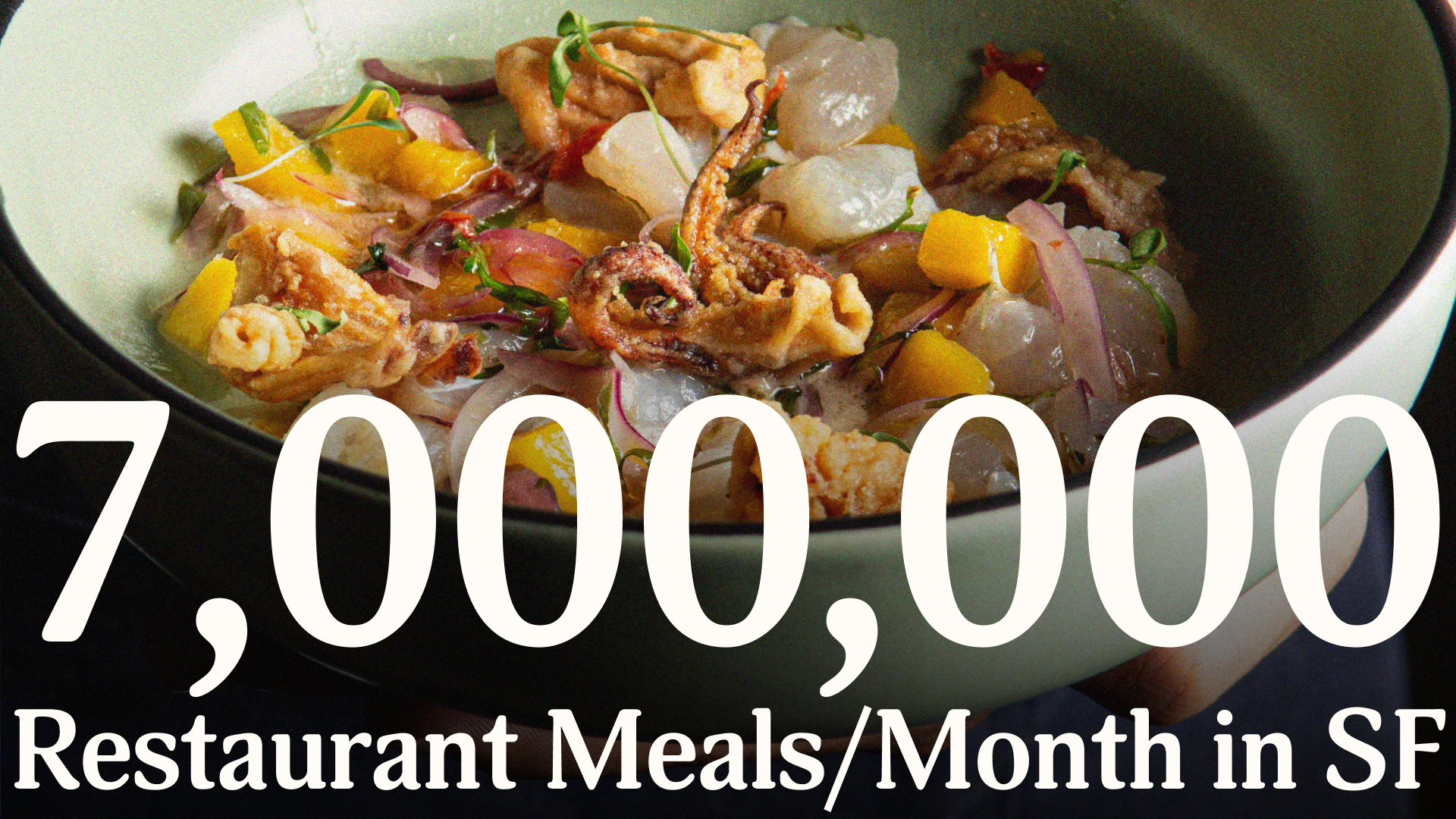
San Francisco consumes an estimated 7 million restaurant meals a month, one of the highest rates per capita in the country. Most of that food comes from industrial distributors whose global supply chains create pollution and disconnect communities from the seasonal, regional food around them.

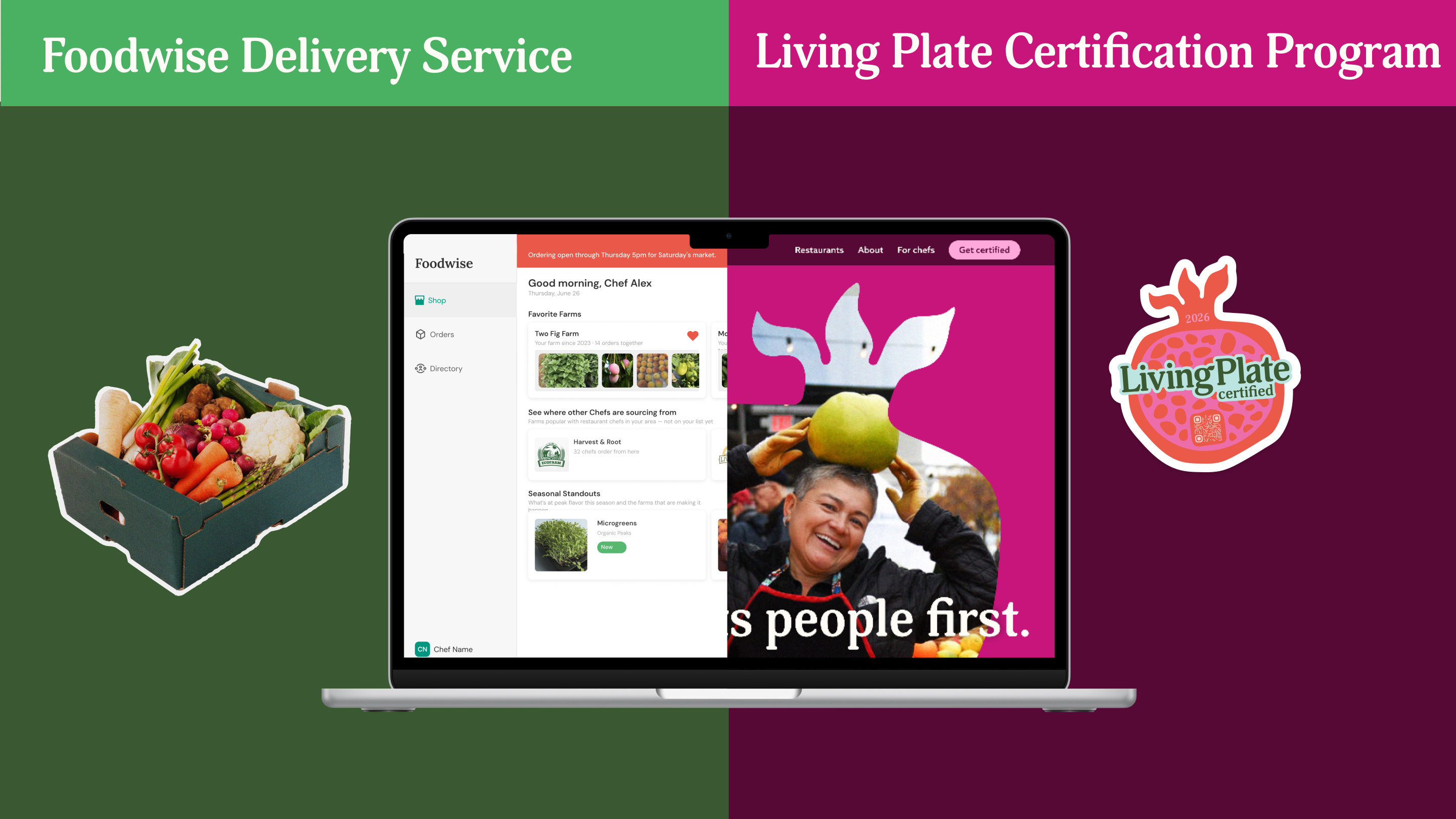
Taking Root is a two-part project aimed at creating more place-based community connection and reducing carbon emissions by getting more Bay Area restaurants to source locally. We are designing a farmers market delivery service that lets chefs order from several local farmers in one place, lowering the barrier to sourcing locally and a certification program that makes those farmer-chef relationships visible to diners through a storefront sticker, a card with their meal, and an online directory of certified restaurants.

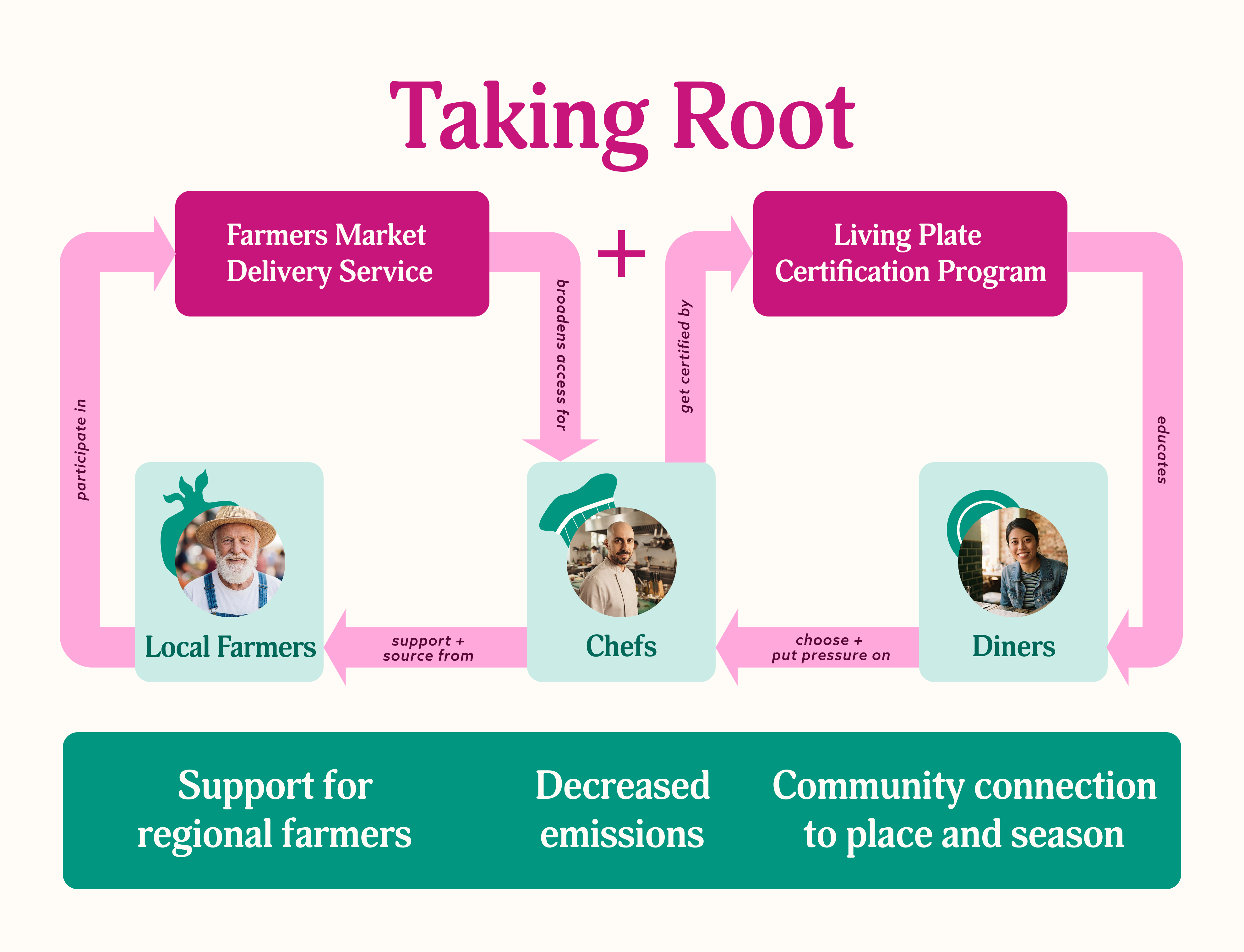
Each half reinforces the other: easier sourcing brings more restaurants in, and diners choosing certified restaurants funnels business their way, creating pressure for more restaurants to participate. We are partnered with Foodwise, the nonprofit behind the SF Ferry Building farmers market, building on their existing Market to Chef program.

Collaborators: Alexa Jacobson, Lydia Chau, and Uyen Phan
PROJECT ADVISORS
The problem
Here in San Francisco, we have one of the highest rates of restaurants per capita in the US— 3.7 per 1,000 residents as compared to the 2.2 US average. That's an estimated  ~7 million restaurant meals that are consumed in this city each month. But, the average diner doesn’t think that much about how restaurants source the ingredients that make up their meal. 

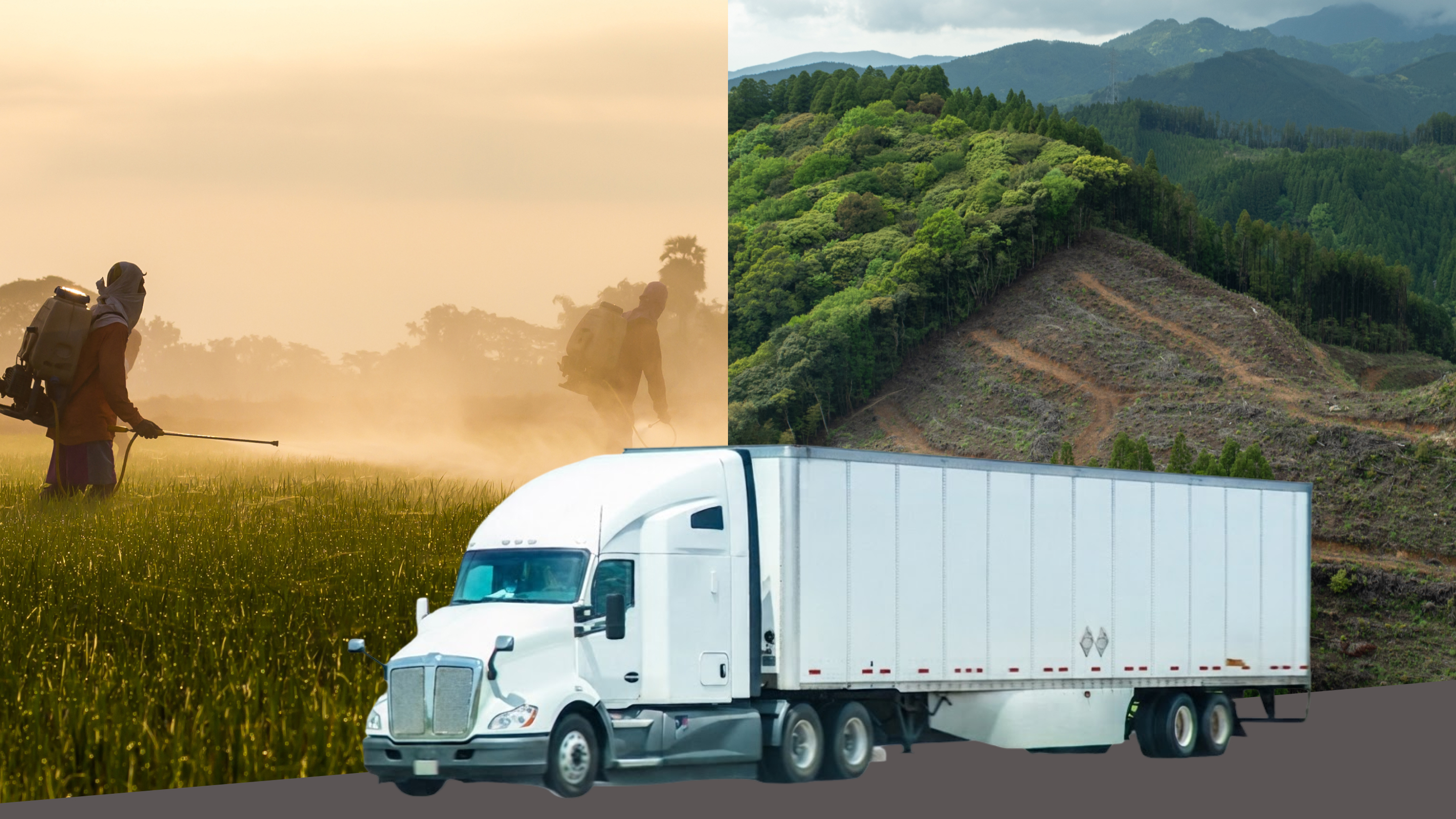
And this invisible choice has profound consequences. Despite being in one of the largest agricultural hubs in the nation, restaurant sourcing in San Francisco is dominated by  industrial suppliers, like Sysco, whose global industrial supply chain contribute to excess greenhouse gas emissions and marginalize local producers.

Between 2017 and 2022, the USDA estimated more than 140,000 farms were lost to supply chain consolidation (2022 USDA Census of Agriculture Annual Report).
What stops local sourcing?
Talking with Bay Area chefs, farmers, and Foodwise's Market to Chef program coordinator about what makes sourcing locally a challenge, we heard: 
  • It's manual. Ordering runs on texts, emails, and conversations at the market.
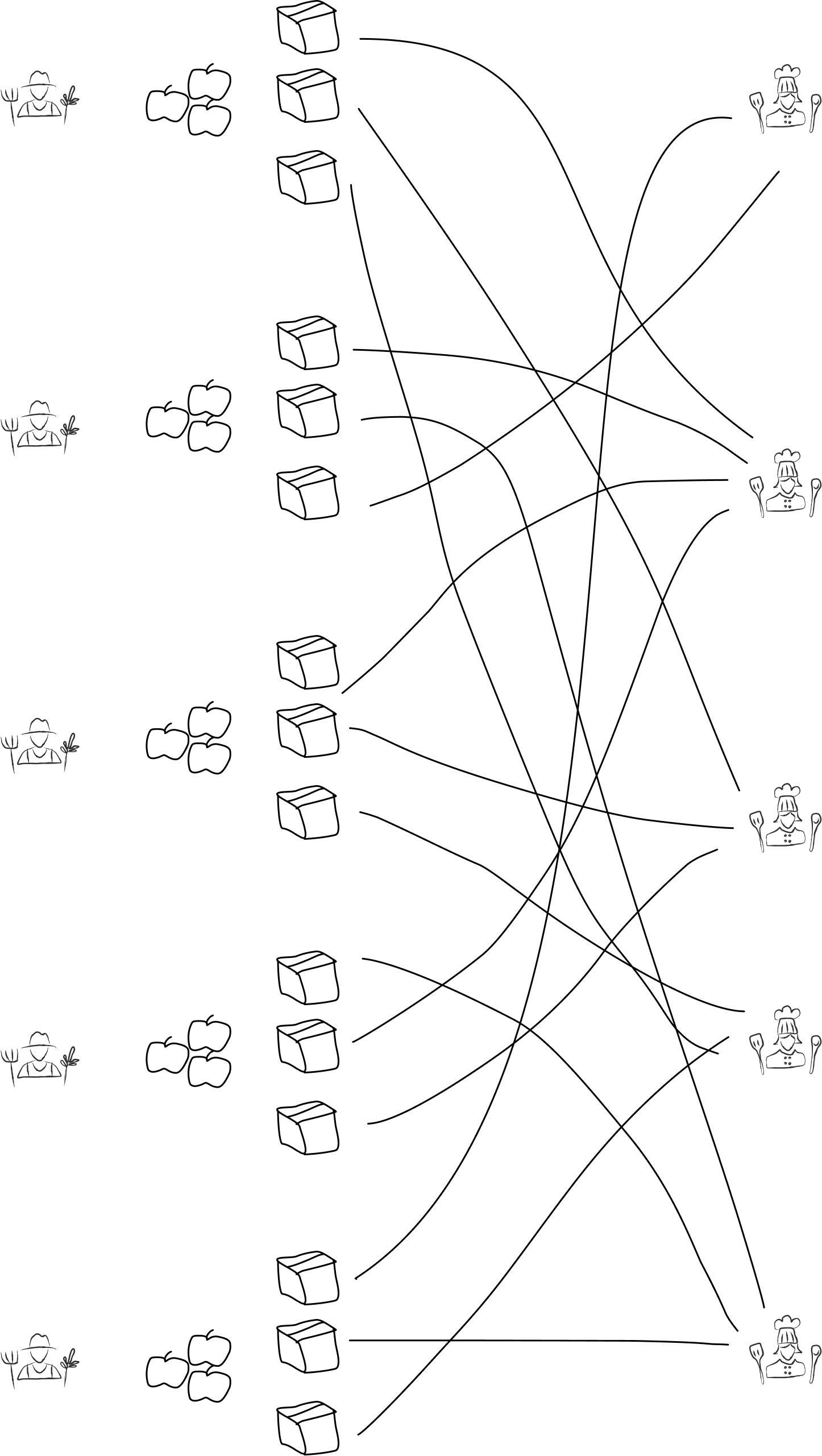
  • It's fragmented. The manual coordination effort is compounded by the fact that a single small farm usually can't supply a whole restaurant on its own, so chefs end up juggling several relationships at once.
  • It costs more. Sourcing locally often comes at a cost premium, and for restaurants to switch even part of their sourcing, there has to be a tangible benefit.
Project goal
How might we connect independent Bay Area restaurants with local farms, and surface those connections to diners, so that local, seasonal sourcing becomes an expected part of the dining experience?
Solution Concept
A farmers market delivery service and a local sourcing restaurant certification program—two parts that reinforce each other to create a circular system around seasonal and local sourcing between farmers, chefs, and diners.
Project partners:
As we worked, we began to see the farmers market emerge as an existing aggregation point for farmers and chefs. Based on this, we reached out to Foodwise, the nonproft behind the Ferry Building farmers market and several others in San Francisco, who served as advisors on the project. IDEO also served as a project advisor.

Foodwise's Market to Chef program:
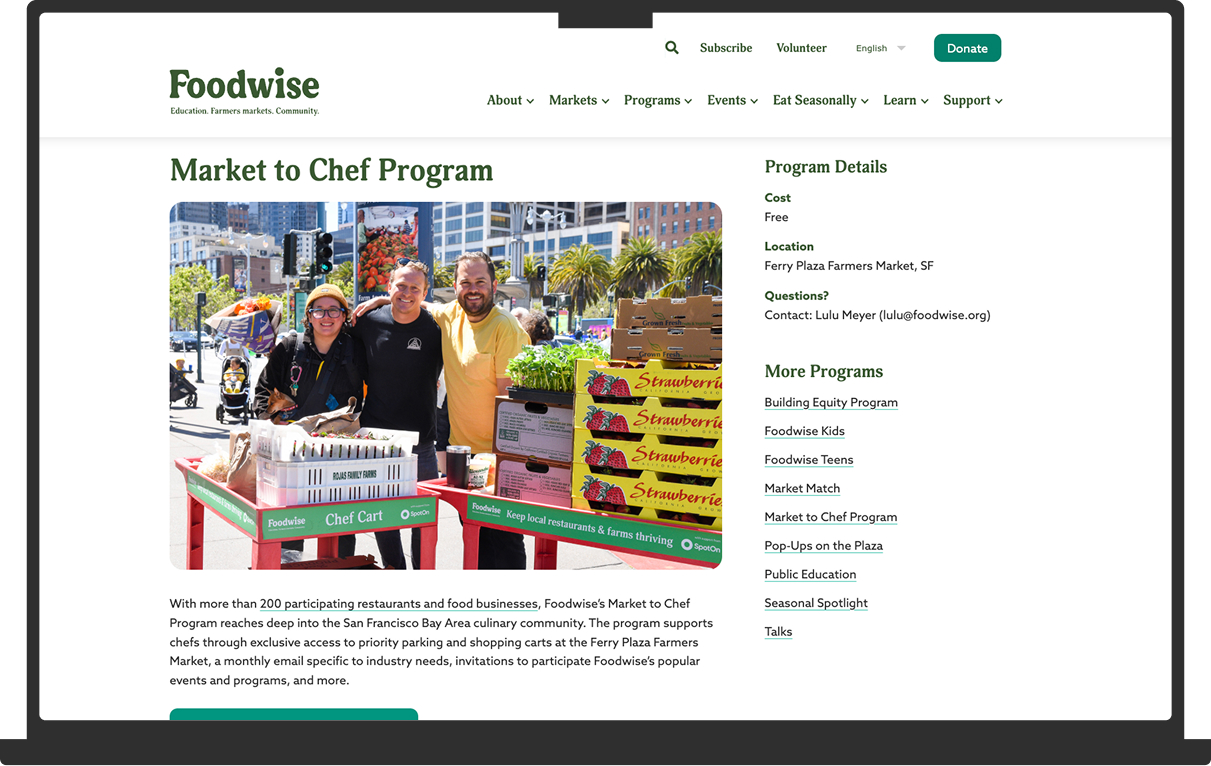
Today, Foodwise operates a program for chefs with 200+ restaurant partners that offers a round of introductions between chefs and farmers and provides a pass for easier parking. For our project, we decided to build on this program and imagine how we could amplify its impact for farmers and chefs and expand its reach to connect more meaningfully with diners.

Role:
I am one of four MDes Interaction Design students on this project, alongside Alexa Jacobson, Lydia Chau, and Uyen Phan. We all worked closely together on early concept development and research, then Lydia and I co-led the design of the certification program. Because the delivery service requires coordinating multiple groups across several touchpoints, I created a service blueprint of the whole system to ensure alignment across our team and ensure the system was well considered before we designed screens for it. To help articulate how the two halves of the system were designed to function together, I created a system flow diagram, which we used to communicate with stakeholders.

Scope:
Taking Root was a two-semester conceptual studio project, completed in partnership with Foodwise and IDEO.
Part 1: Foodwise farmers market delivery service
Making local sourcing as familiar as ordering from a distributor (lowering the barriers to entry)
One of the significant hurdles that emerged from our research was the time and new workflow required from chefs to source locally. Many chefs are extremely busy and don't have time to go visit the farmers market in person or keep up with manual coordination needed to source from individual farmers.

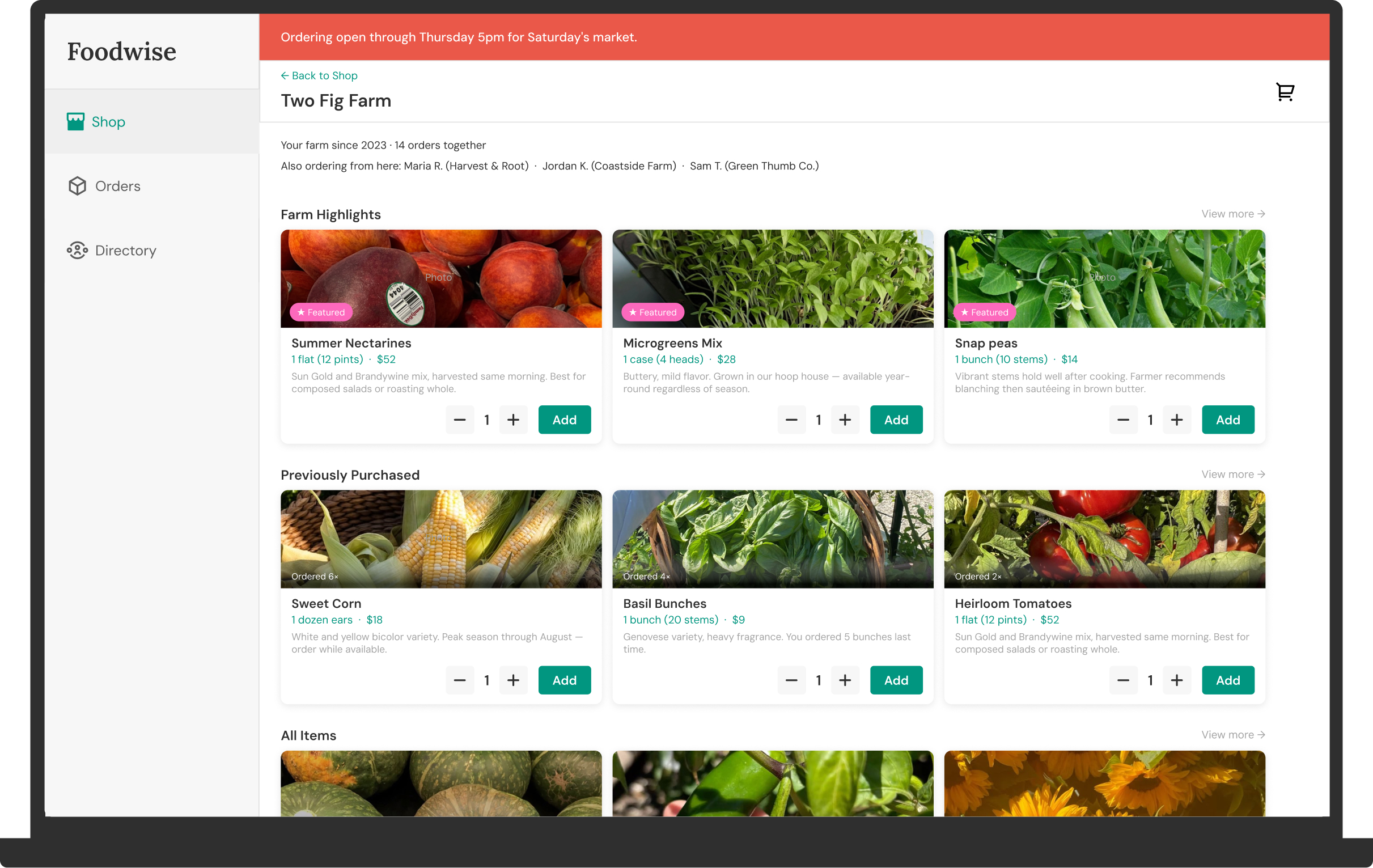
Restaurants that don't currently source locally are already accustomed to ordering online from distributors like Sysco or Costco, so an online ordering and delivery service lets local sourcing fit into that same familiar workflow. This same platform also resolves the ordering and communication challenges both farmers and chefs raised: instead of coordinating with each restaurant individually, farms manage everything through one system.
Considering the work that happens prior to delivery and meeting people how they operate today
During the concept design phase, one of the most important pieces was considering how we can reduce the manual effort of uploading inventory for farmers and of ordering for chefs.

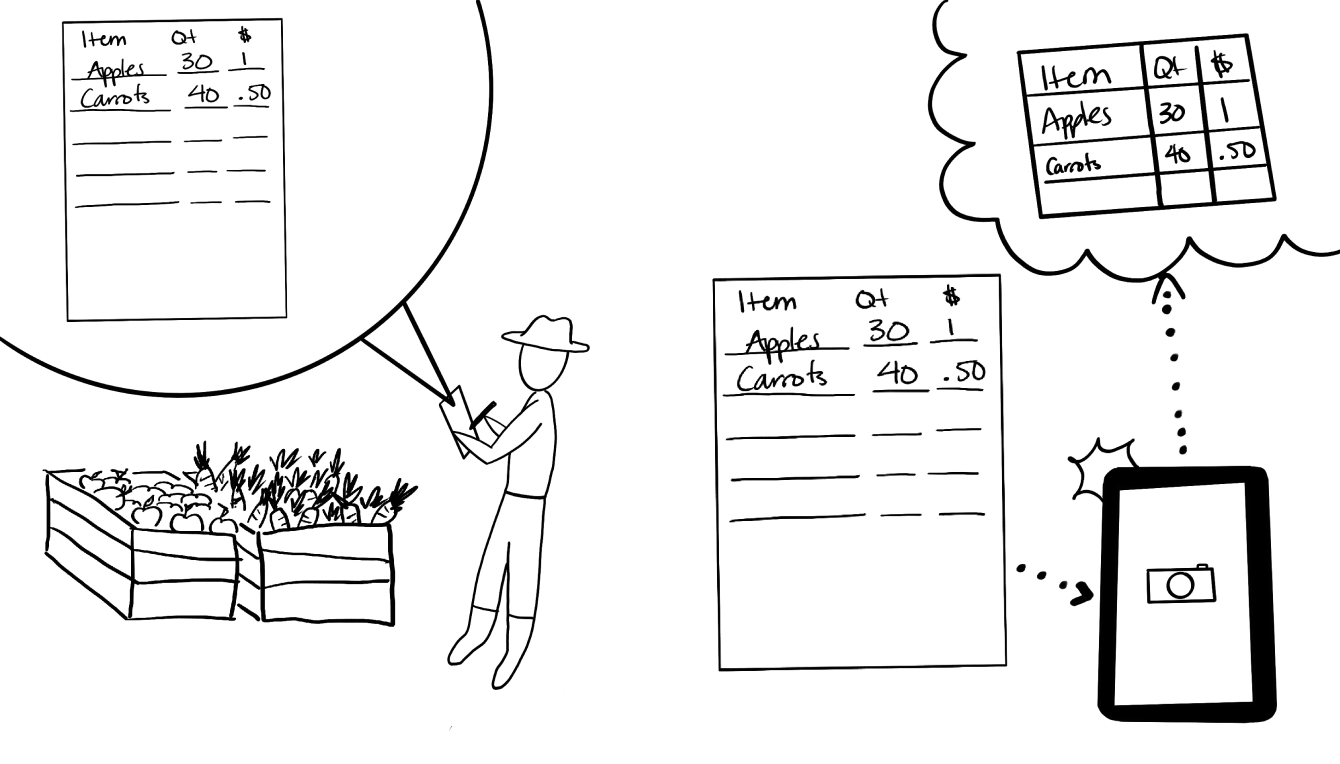
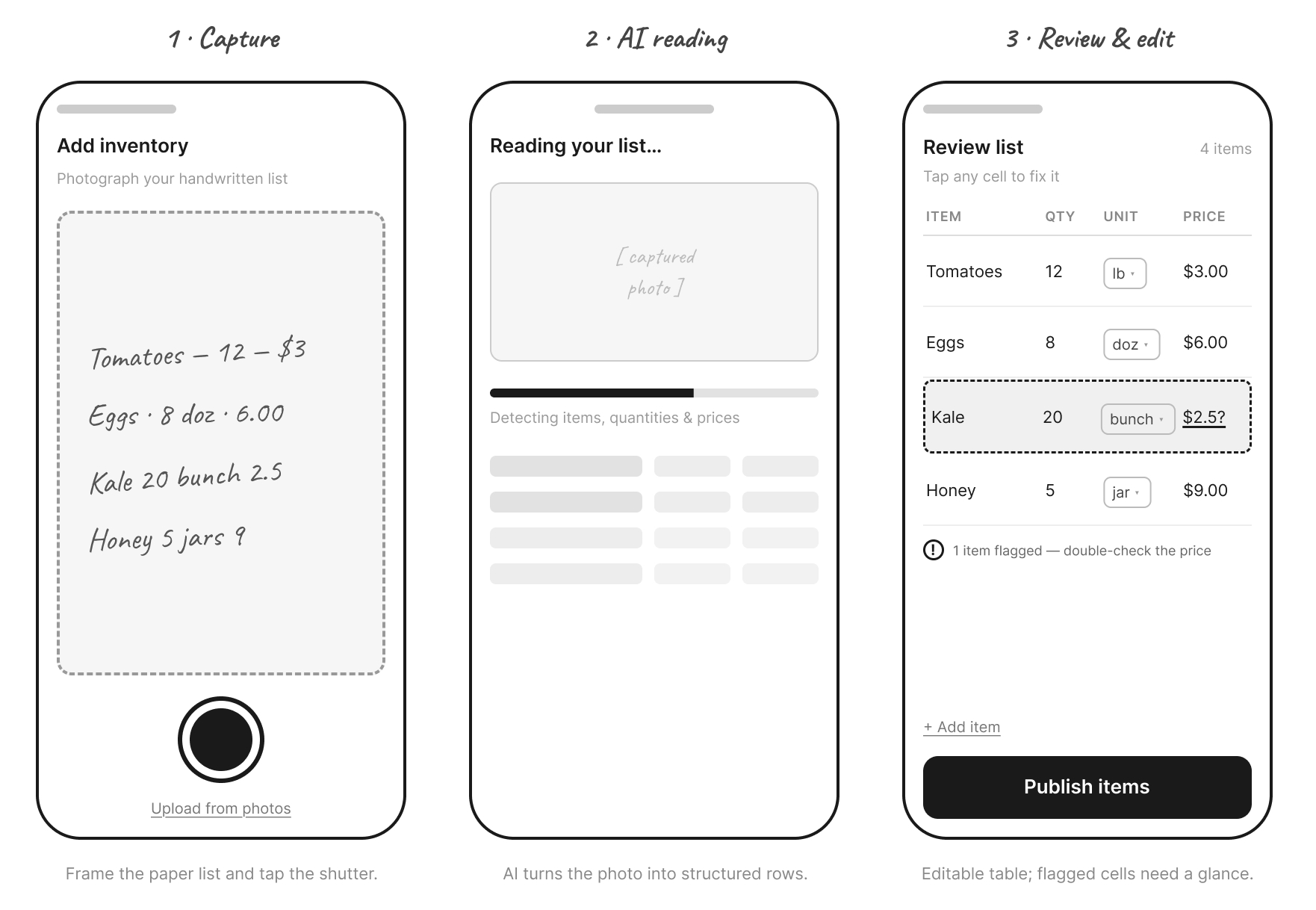
For farmers, I proposed a feature that allows them to take a photo of a handwritten inventory list and use AI to parse it automatically—simplifying a manual administrative process. When we tested this with farmers, the response we heard was:
"Where has this feature been? We need this."
Designed with Claude Design.
Additionally, I proposed a similar functionality for chefs where they can input their grocery list (handwritten or digital) and an AI-assisted search suggests a basket of products—taking into account established relationships (places the chef has ordered from before), cost, and pickup complexity (favoring the fewest farms that can still cover the full order).
Leveraging an existing aggregation point to create an economy of scale
Talking to small, local farmers, we heard that supplying restaurants also presents a challenge for them. Many small farms don't have the time or money to implement online ordering themselves. Keeping up with communication to chefs also eats up a lot of their precious time and is slow—communicating real-time inventory is nearly impossible and leads to waste. Additionally, each farm ends up providing its own delivery to the restaurant, which is costly.

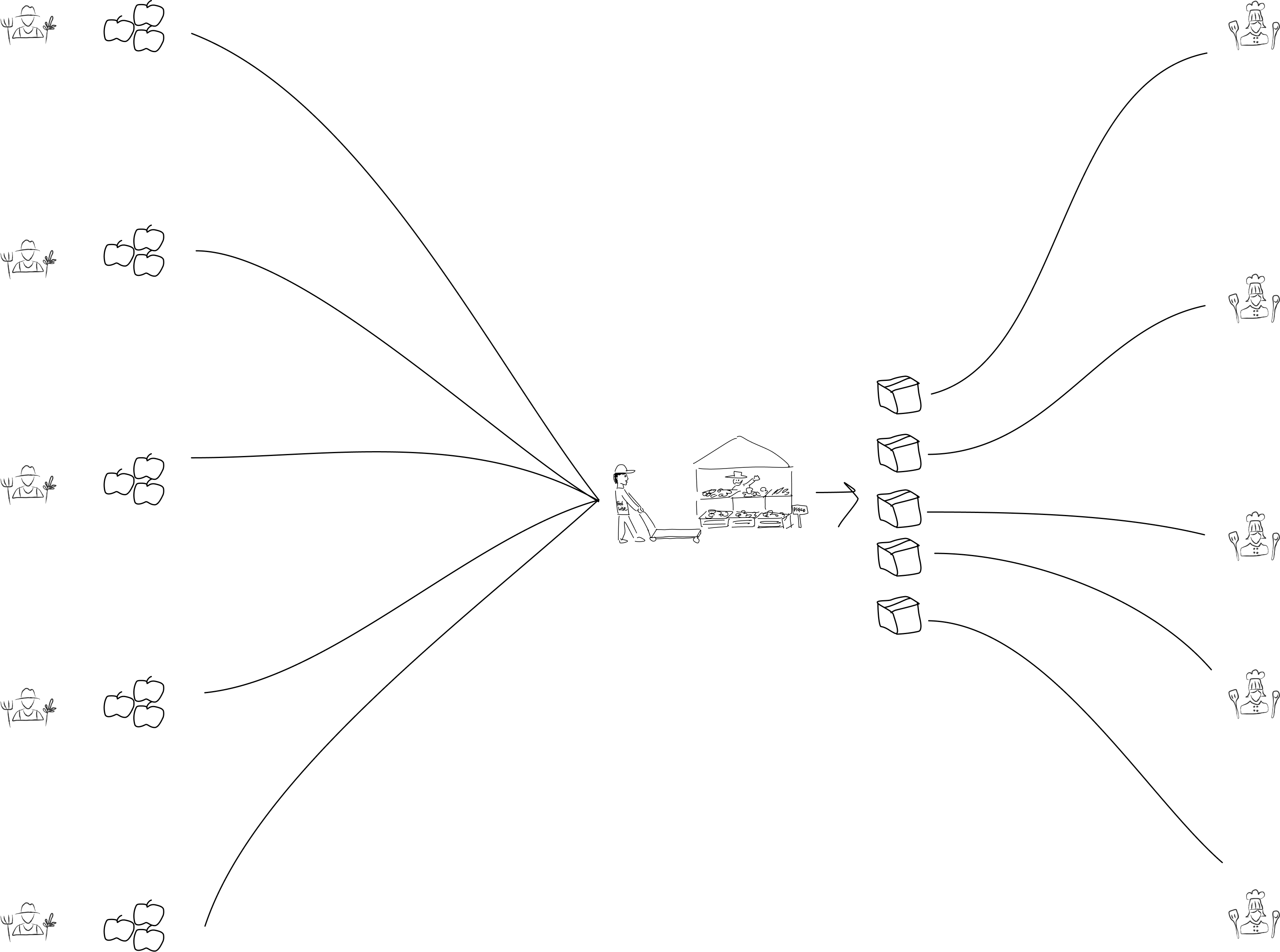
We identified the farmers market as an existing place where farmers come together regularly. By organizing delivery around this existing informal network (farms already selling side-by-side at the market), we let independent farms capture the economy of scale a formal co-op would provide (a centralized ordering system and shared delivery), without requiring the overhead of one.

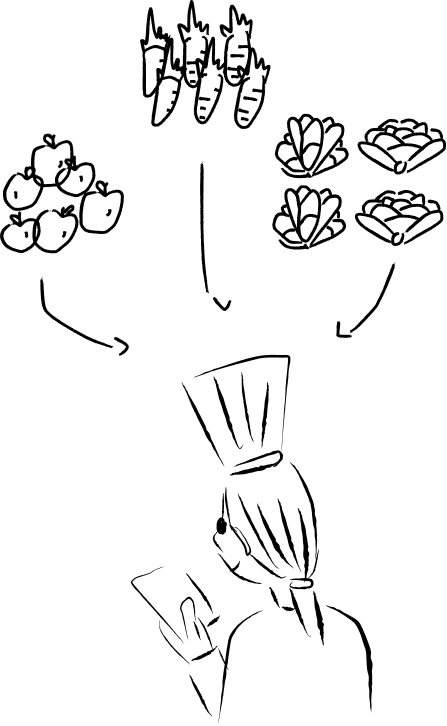
This aggregation is also key for providing enough inventory and variety to dependably supply local restaurants. One small farm isn't enough—we heard from restaurants that they typically need to source from 3-4 farms to get what they need.
Mapping the system before designing screens to expose and address gaps
The delivery service asks a lot of people to coordinate across a full week: the farmer uploading inventory, the chef ordering across several farms, the Foodwise runner collecting and sorting at the market, and delivery staff getting it to the restaurant.

Rather than guess at any one screen without understanding the full picture, I built a service blueprint of the entire system at work, from Tuesday inventory upload through Saturday market handoff to the order reaching the restaurant.

This blueprint became the guide for the members of the team who fleshed out the delivery service designs.
Mapping every step surfaced several gaps we had not accounted for:
  • Cutoff times. Farmer uploads and chef orders both needed hard deadlines to make the week work.
  • The runner role. Foodwise runners collecting and sorting orders at the market needed their own dedicated support in the flow to make sure this role functions efficiently.
  • A two-day pack window. While we initially budgeted a single day for farmers to pack orders, we found out through interviews that they would instead need two days and updated our schedule accordingly.
Part 2: Living Plate certification program
Making invisible relationships visible
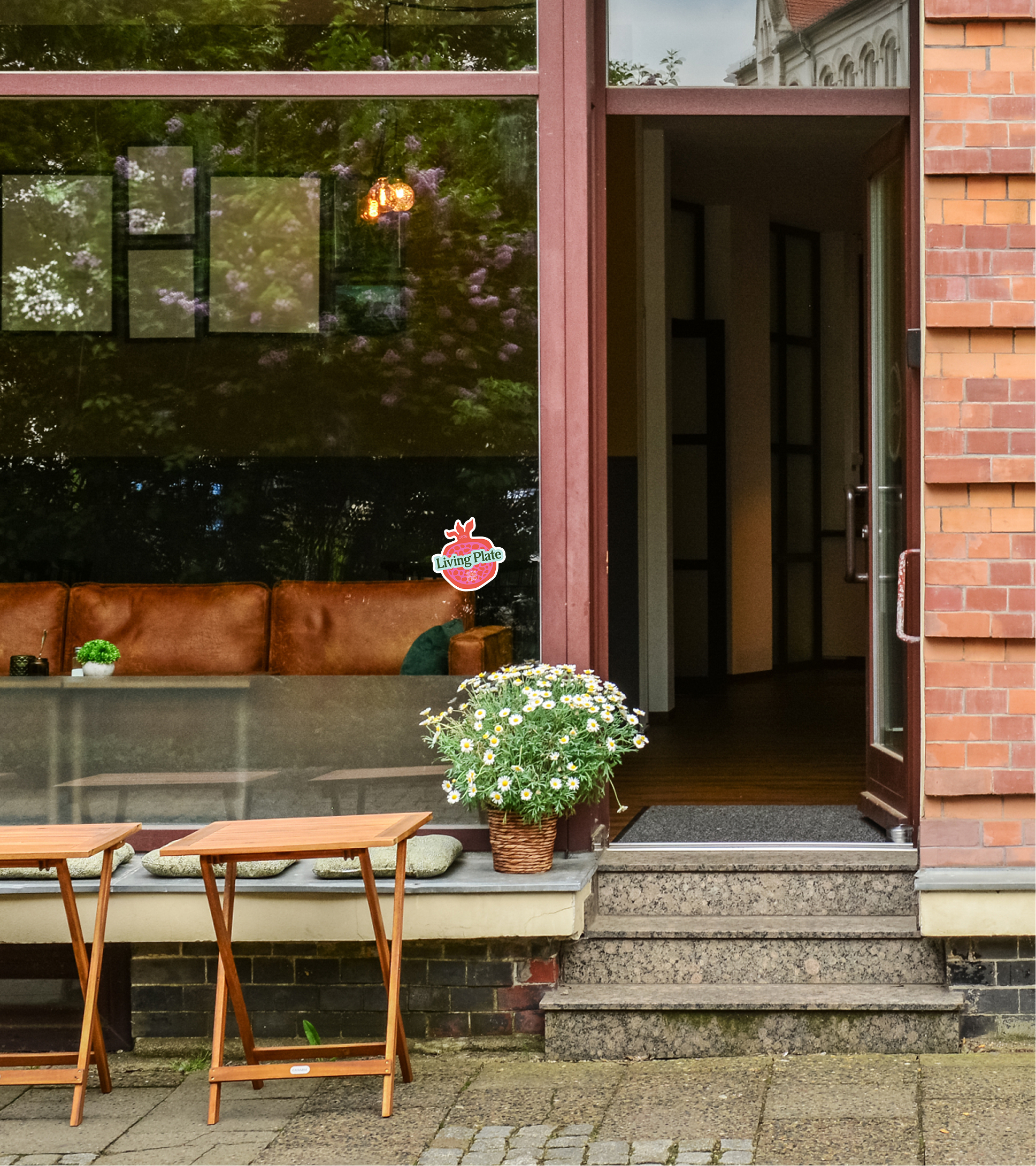
The Living Plate certification program makes farmer-chef relationships visible to diners through two pieces I worked on: a storefront sticker with a QR code that points to the diner-facing website with a directory of participating restaurants and information on the impact of local sourcing.
Designing the Living Plate sticker
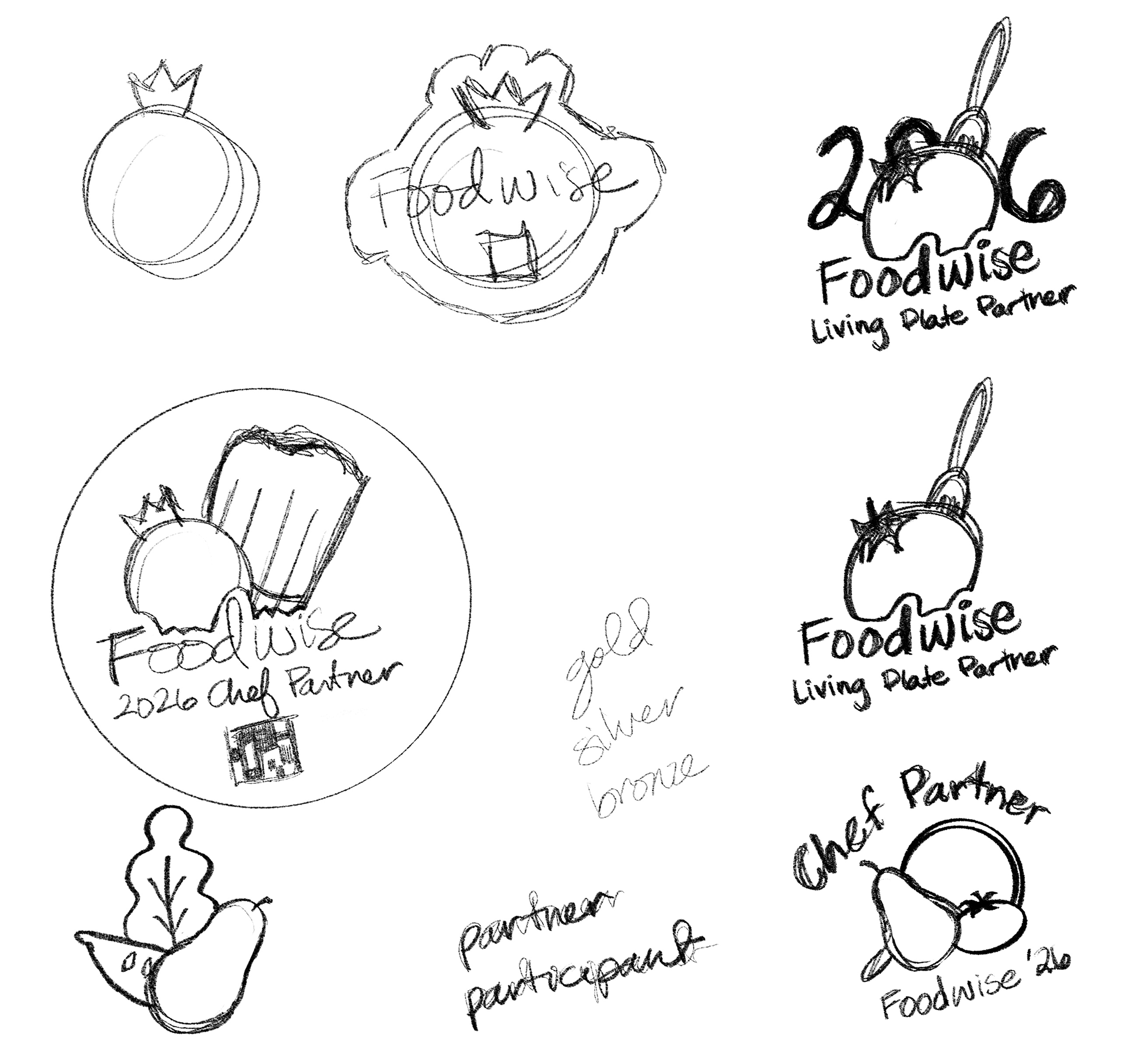
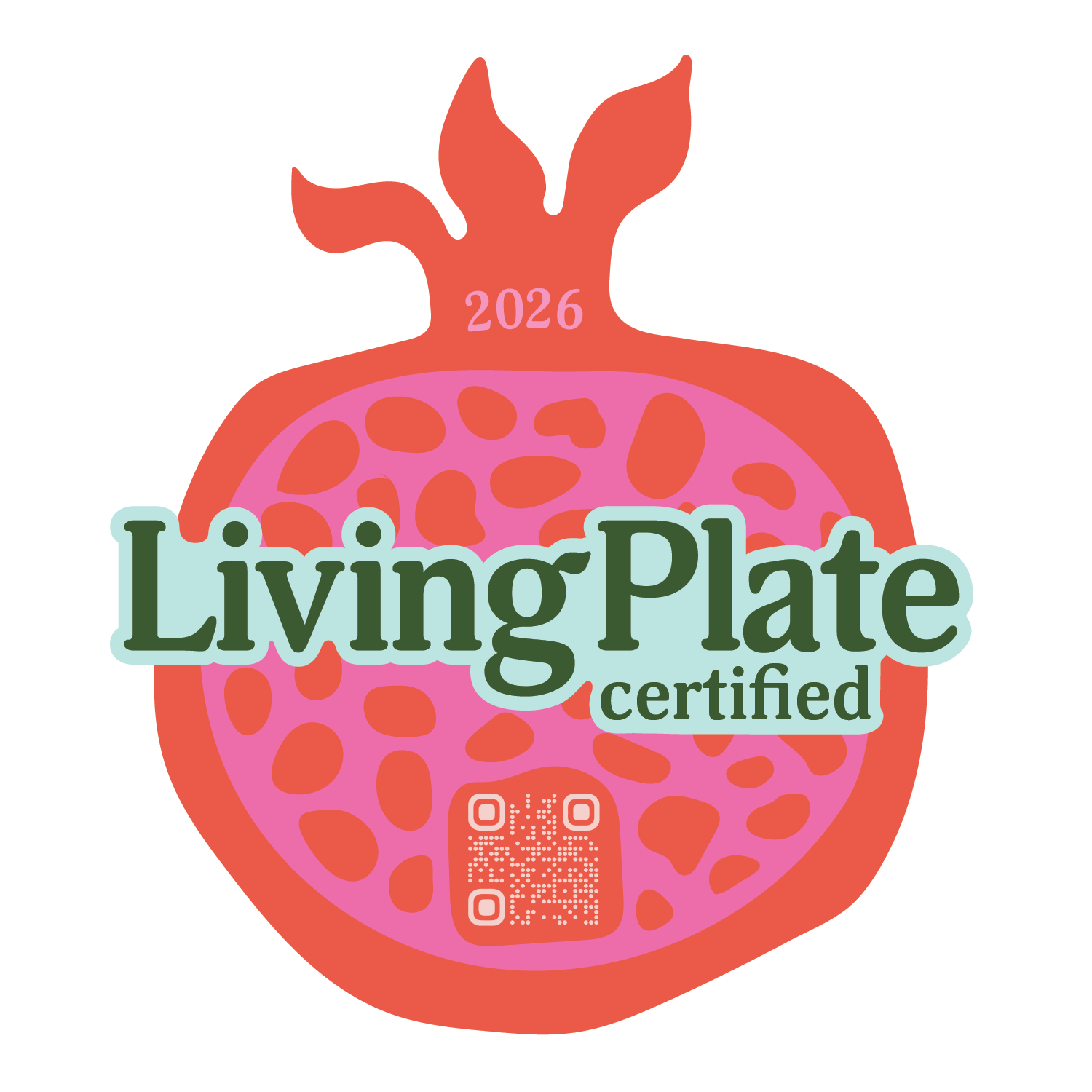
Because the sticker needed to be something people would notice just walking by, I leaned into brightness and visual weight, landing on a hot pink pomegranate illustrated in a style that echoes Foodwise's existing produce illustrations. That stylistic tie helps communicate the connection between the Living Plate certification program and Foodwise.

In developing the sticker, I also iterated on the wording. Early drafts read "Chef Partner," which implied a two-way partnership rather than something a restaurant earns. I landed on "Living Plate certified" to make clear this is a certification program and included the year to communicate it's a status that's maintained, not just conferred once.
An attention-grabbing sticker on the outside of certified restaurants creates awareness among diners and passersby alike.
Living Plate website: cultivating diner demand for local restaurant sourcing
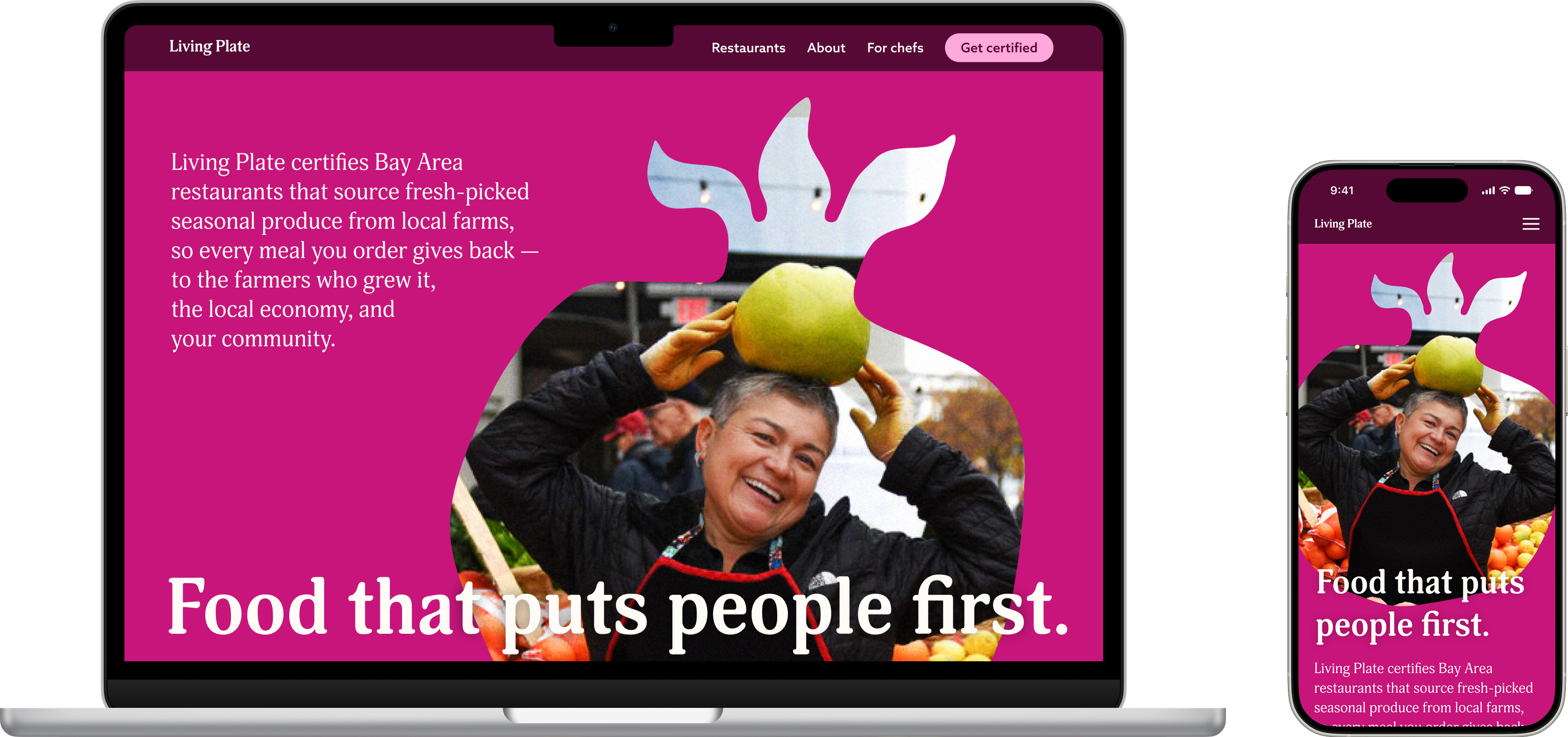
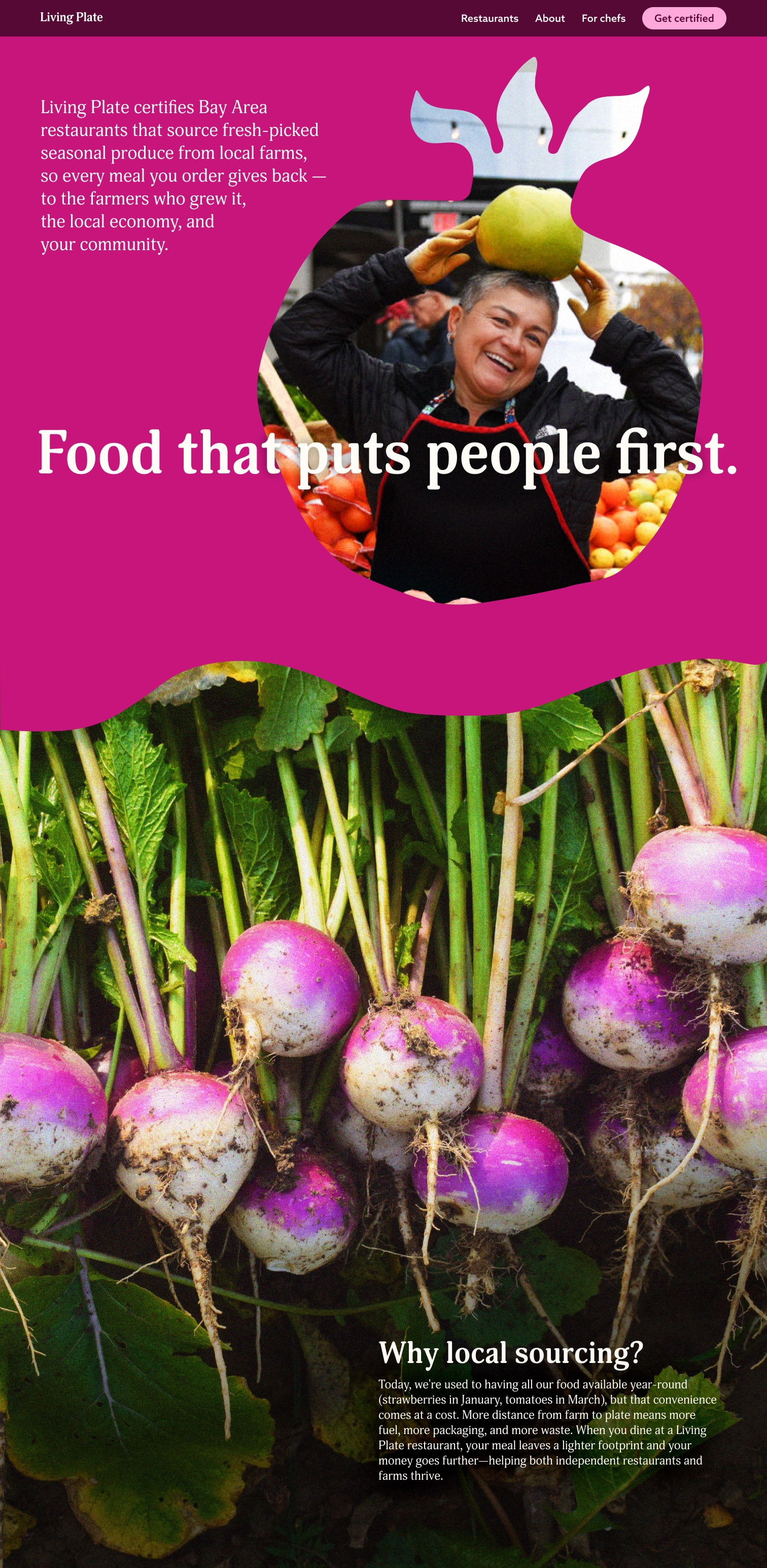
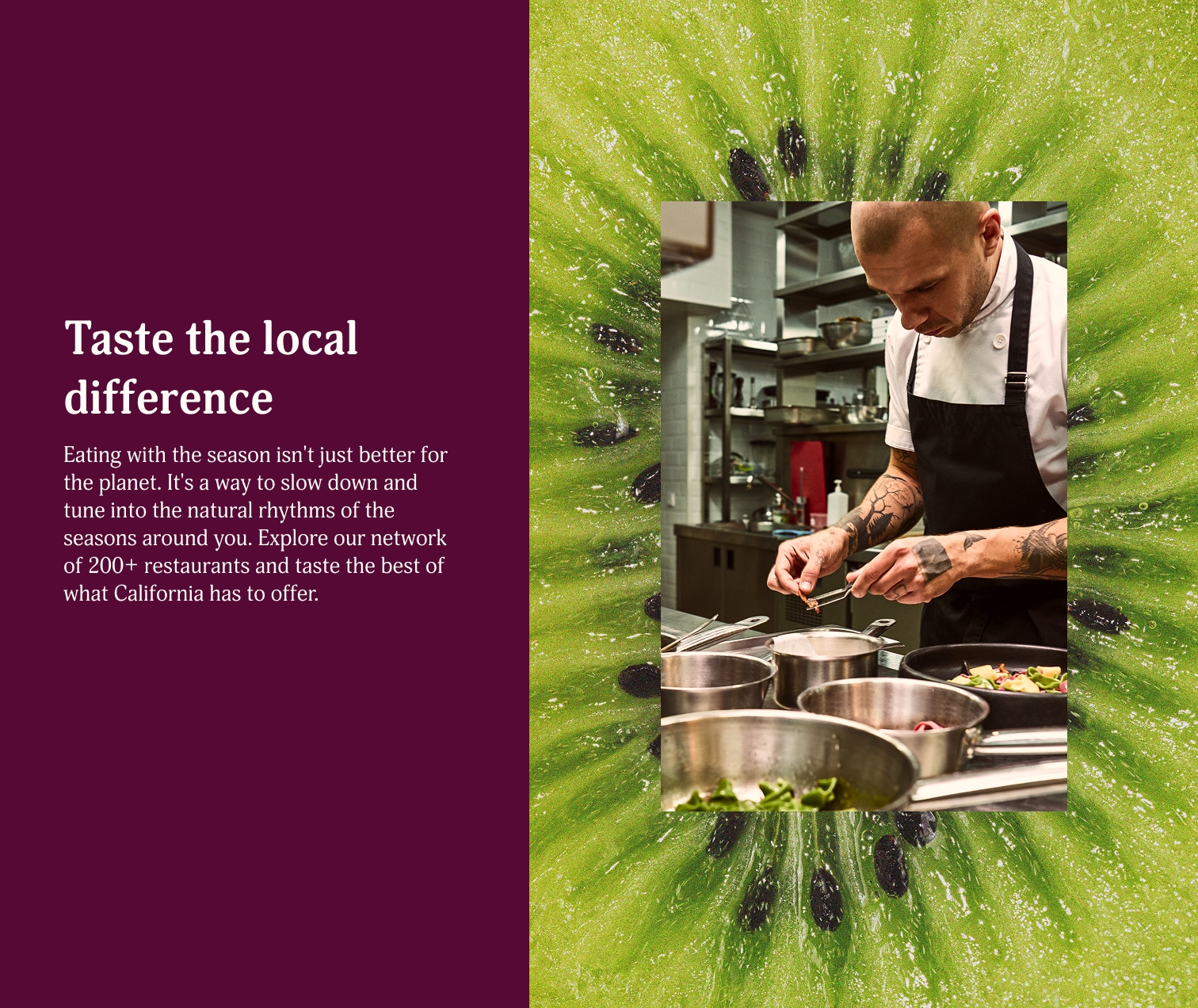
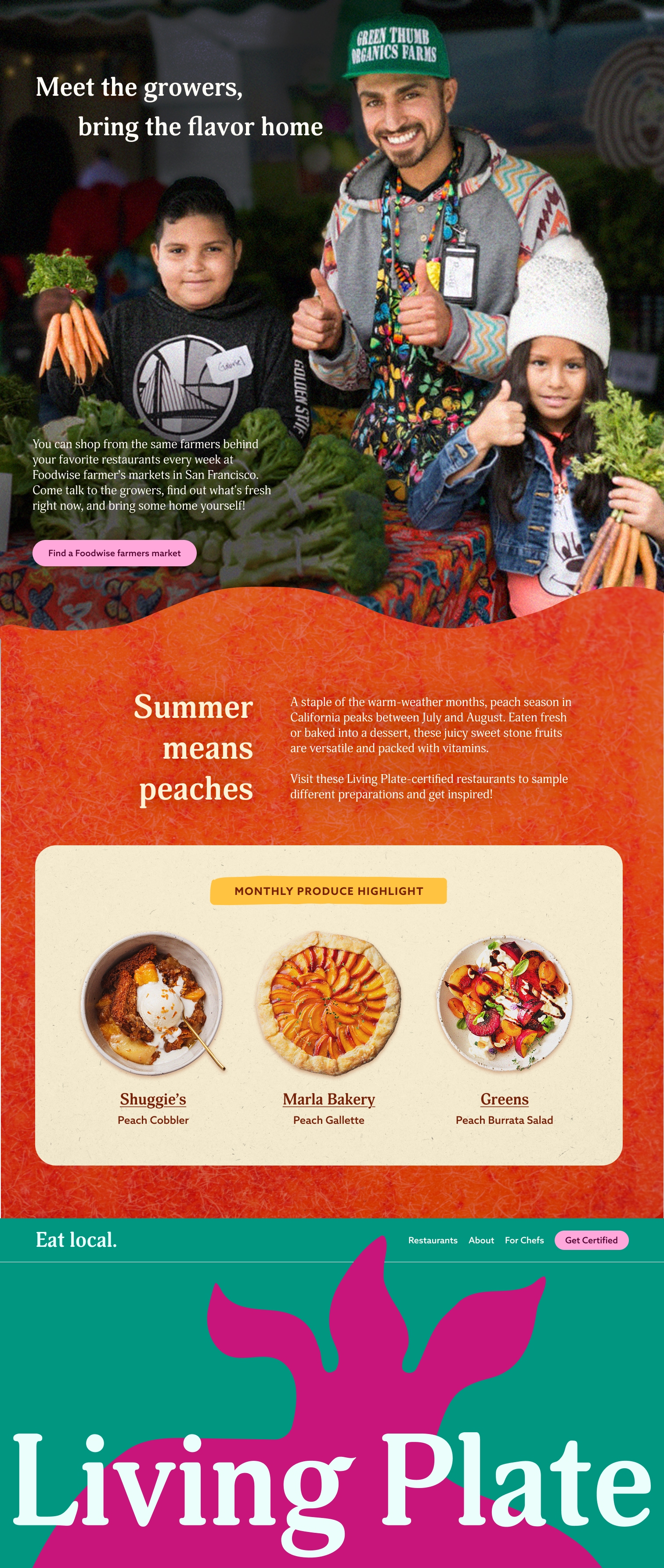
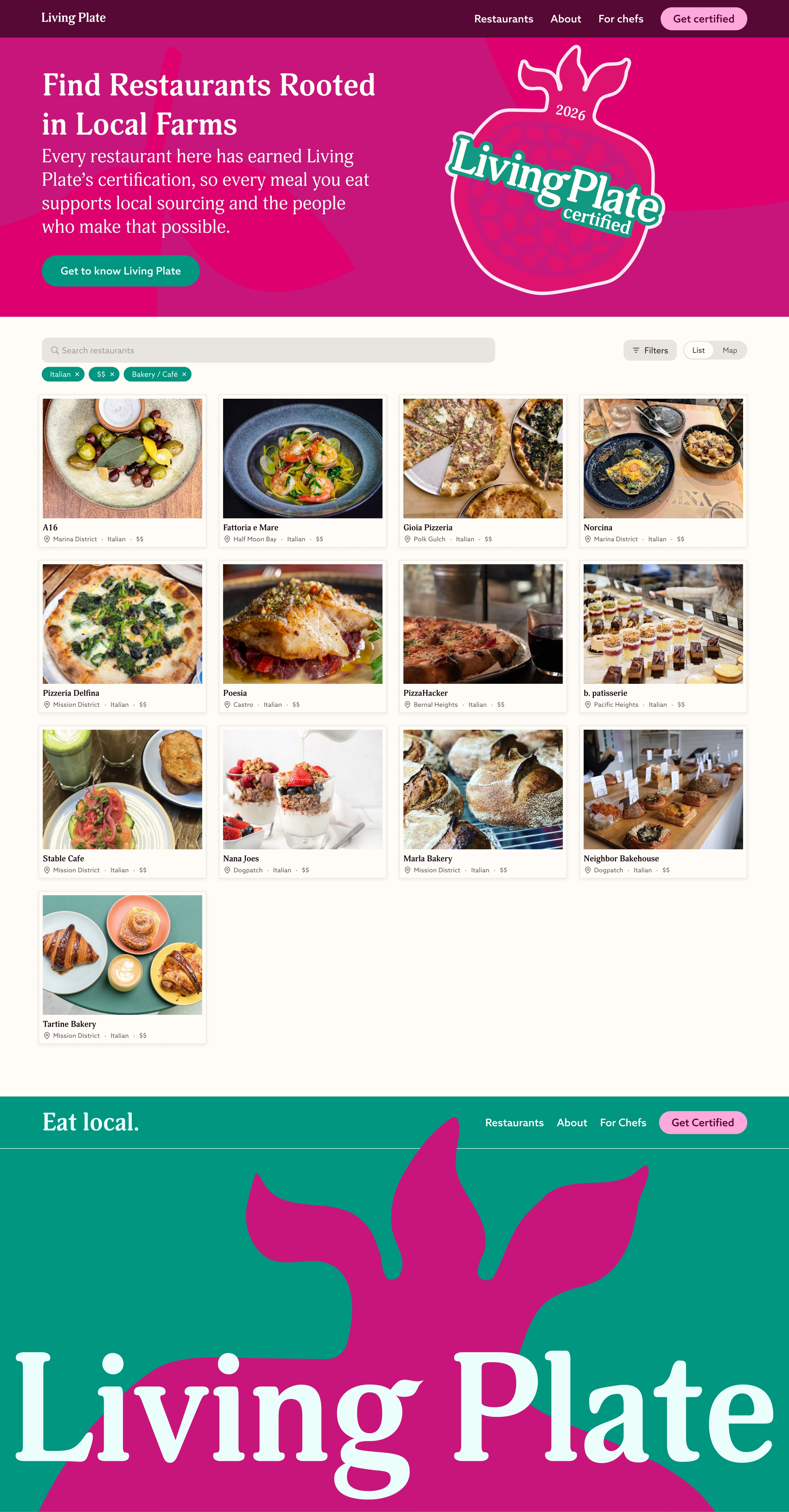
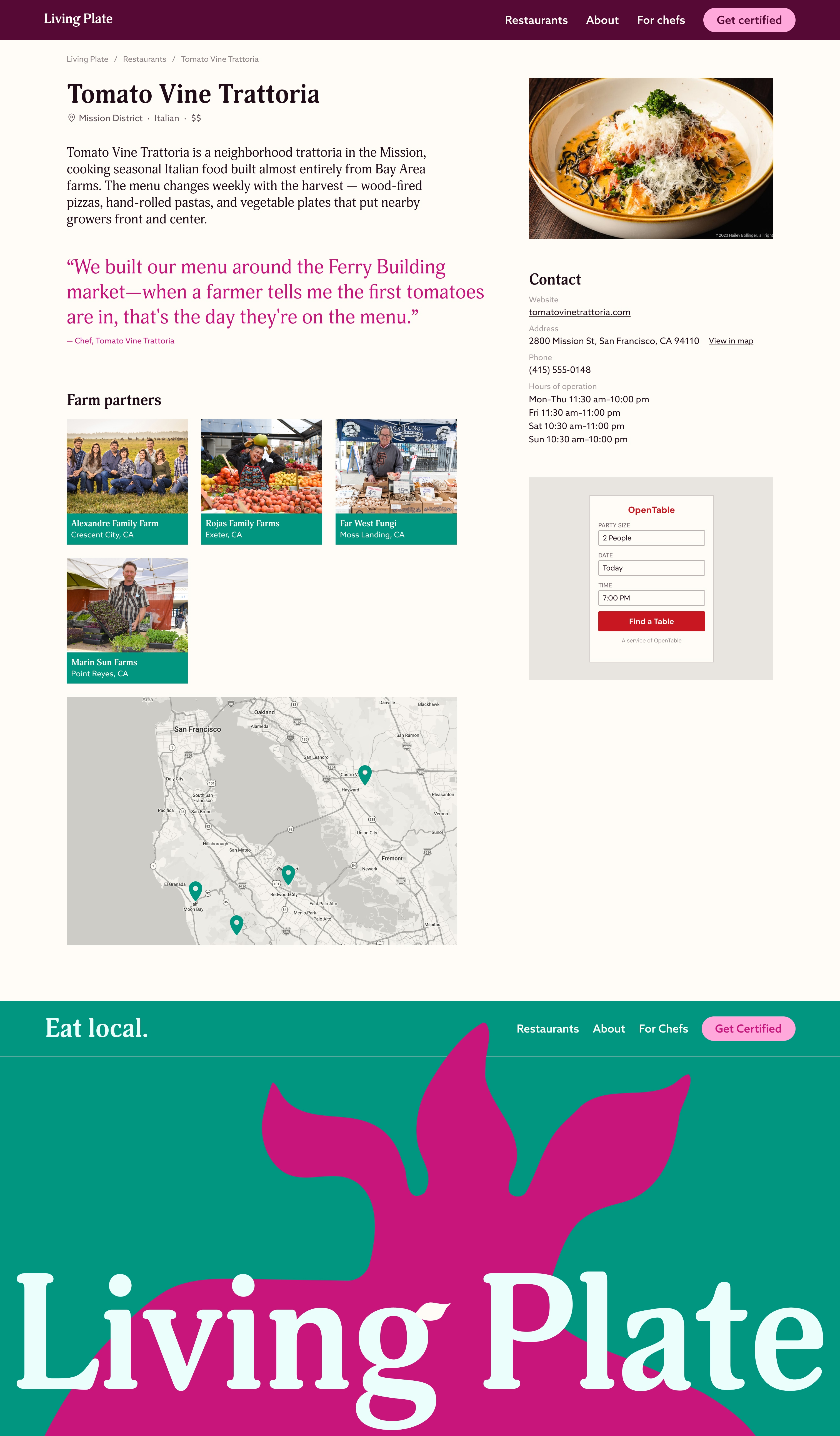
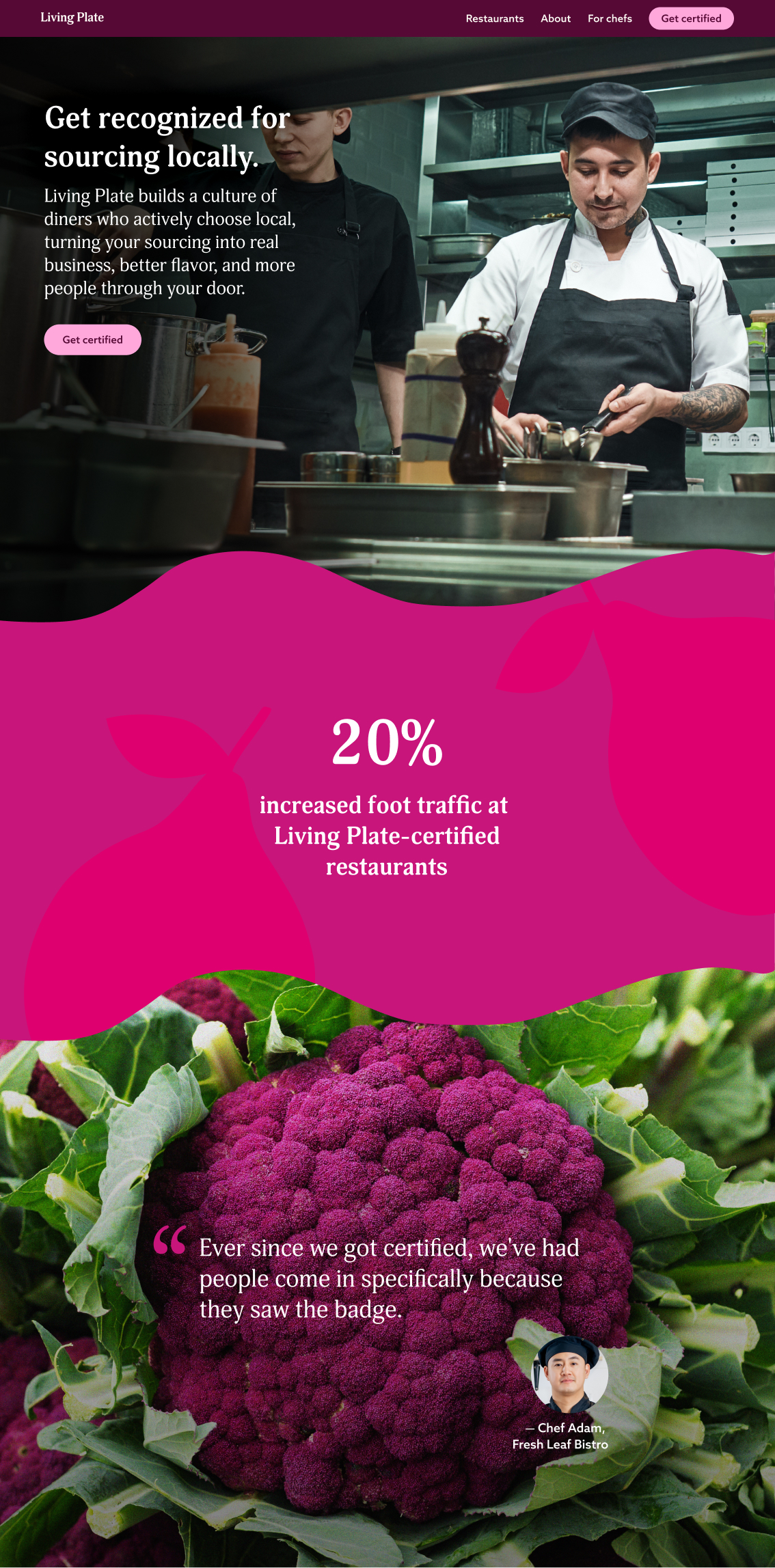
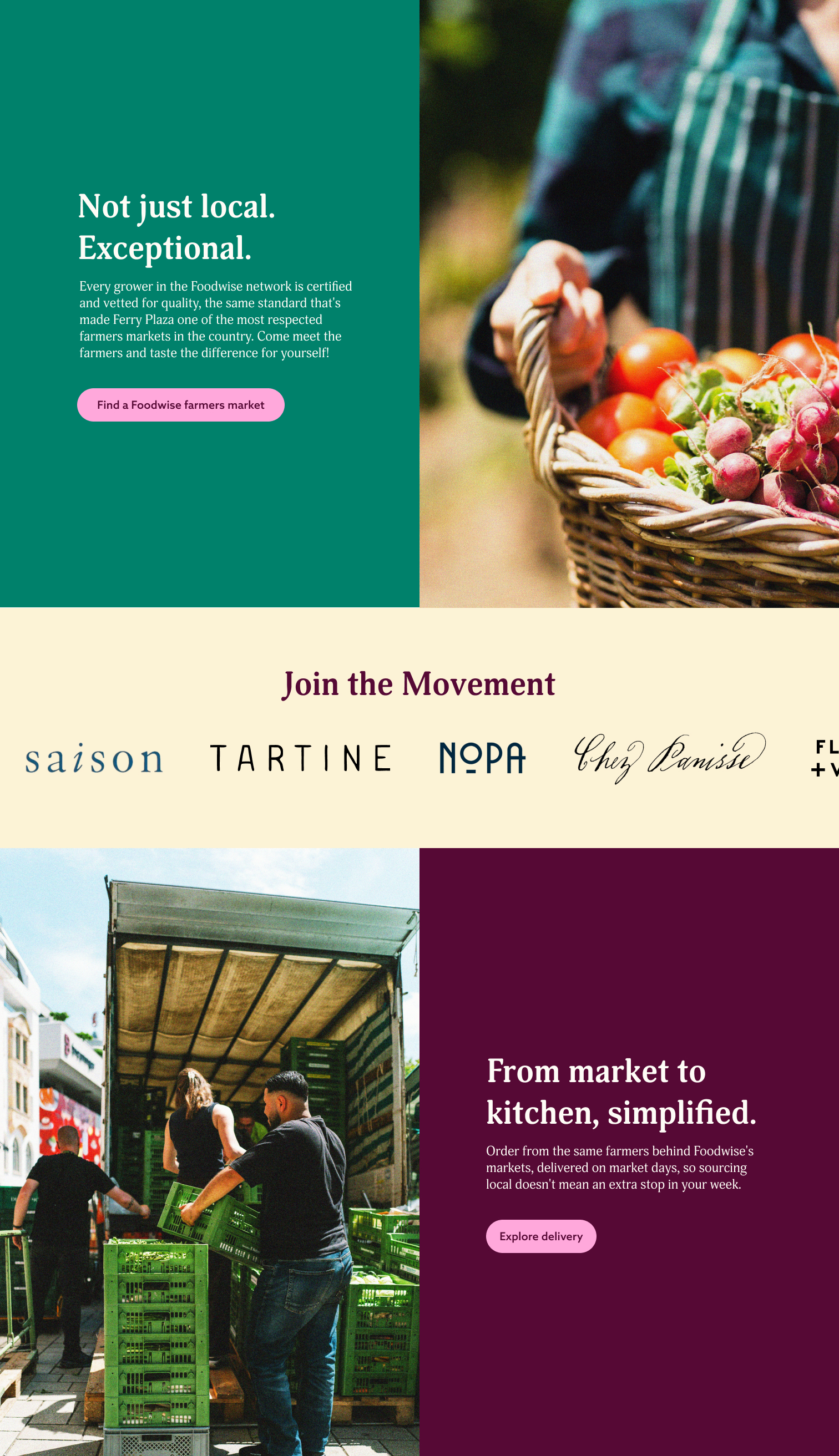
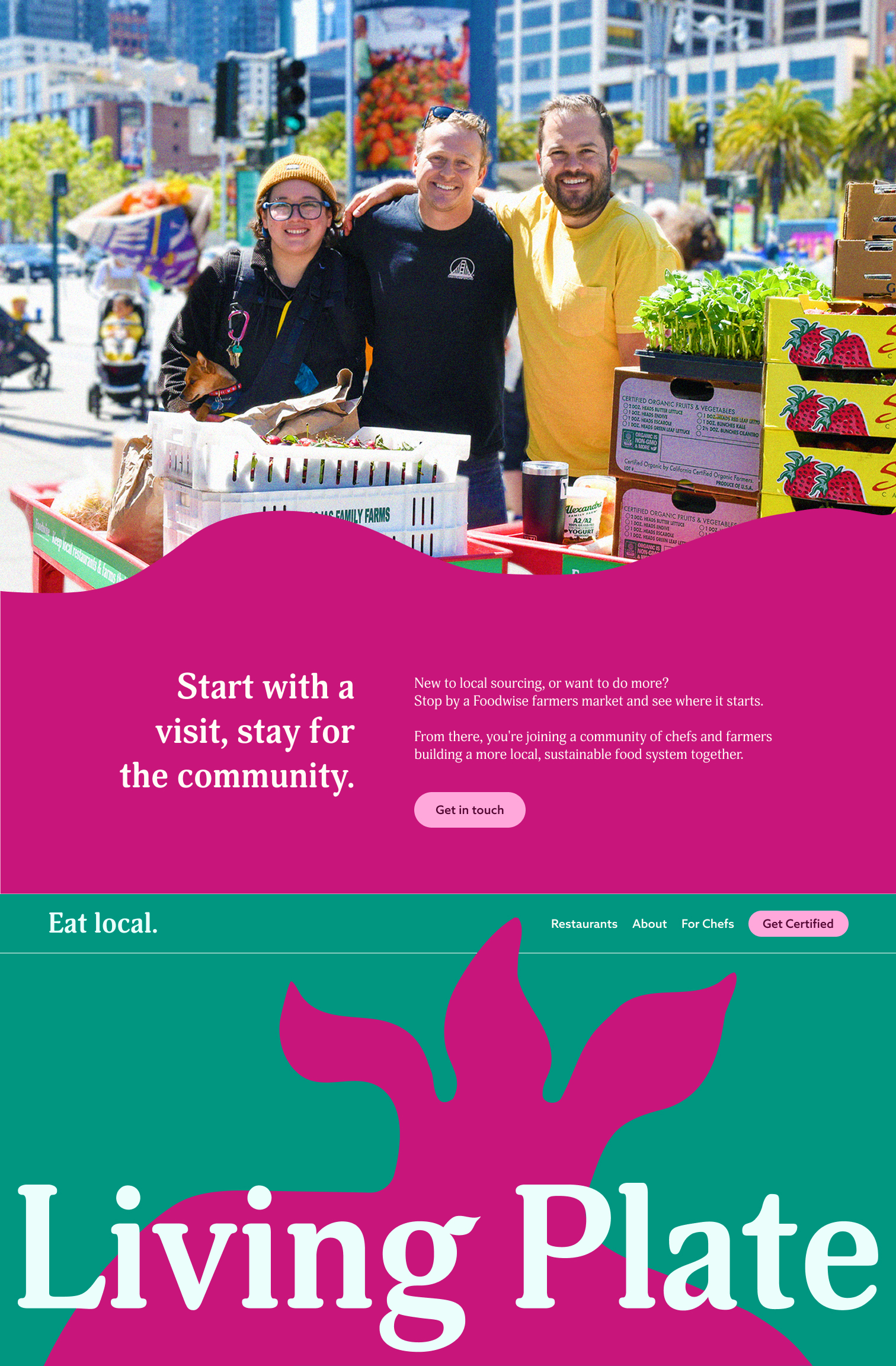
The website takes the initial spark of interest from the sticker and gives it somewhere to go. The site includes an explanation of why local sourcing matters, for diners who haven't thought about it before, and a directory of other certified restaurants, so diners can find their next locally-sourced meal.

We believe that together, these features can shift local sourcing from a niche preference to something diners actively seek out. As more diners choose certified restaurants over uncertified ones, that visible preference puts pressure on restaurants that don't source locally to start.

From testing these pages with diners, we found that messaging focused on fresh flavors and the benefits to farmers resonated more strongly than a climate-first approach.  Based on this, I also leaned into showing the faces behind the food system.
The Living Plate website turns curiosity into action—giving diners an avenue to find and patronize other participating restaurants.
Homepage: introducing diners to the importance of local sourcing
Restaurant directory: making finding your next locally-sourced meal easy
For chefs: information on local sourcing and the Living Plate program for restaurants
Select images of the farmers market and farmers courtesy of Foodwise.